Beyond the Chatbox: The Rise of Autonomous Agents in the Enterprise
Discover how AI copilots are evolving into autonomous agents and shifting enterprise SaaS from seat-based pricing to an outcome-based economy.
AI copilots inside enterprise SaaS are no longer just fancy search bars. We are witnessing a fundamental shift from passive assistants to autonomous agents that execute work without constant human oversight. This evolution changes how we measure the value of software entirely.
Why this matters
For the first time, software is moving from a cost per seat to a cost per outcome. If your CRM can close a support ticket or qualify a lead on its own, the ROI becomes immediate and quantifiable. Companies that ignore this shift will find themselves paying for idle human hours while competitors scale with a digital workforce.
The shift to agentic autonomy
Early iterations of AI in SaaS required a human to prompt, refine, and verify every output. Modern systems like Salesforce Agentforce and Microsoft Agent 365 have moved beyond this loop. These platforms now use advanced reasoning engines to break down complex goals into actionable steps.
Instead of asking a copilot to summarize a meeting, you now tell an agent to onboard a new client. The agent identifies the missing documents, emails the stakeholder, and updates the contract status in the background. This is the transition from a co-pilot to an actual digital employee.
New pricing models for the agent era
The most significant change in 2026 is how we pay for these capabilities. Industry leaders are moving toward a pay per action model. For example, Salesforce has introduced a credit system where enterprises pay roughly $0.10 per successful agent action.
- Outcome-based billing: You pay for the resolution, not the subscription.
- Scalable workforce: You can spin up thousands of agents during peak season without hiring.
- Granular ROI: Finance teams can finally see exactly which AI workflows are driving profit.
Orchestration and the GPT-5 leap
Integration with models like GPT-5 has provided the reasoning depth required for high-stakes enterprise tasks. These models allow agents to handle nuanced customer sentiment and complex compliance requirements. The focus has shifted from simple text generation to sophisticated orchestration across multiple software silos.
ServiceNow has emerged as a leader in this orchestration space by acting as the control tower for various agents. Their platform allows different AI entities to talk to each other. This ensures that a marketing agent and a supply chain agent do not work at cross-purposes.
Preparing for an agent-first workflow
Adopting these tools requires more than just a software update. It requires a rethink of your data architecture. Agents are only as effective as the data they can access through your Data Cloud or internal knowledge bases.
- Clean your data: Agents require structured, accessible data to make accurate decisions.
- Define guardrails: Use tools like Agentforce 360 to set strict logic and ethical boundaries.
- Audit your seats: Identify which roles can be augmented by autonomous agents to save costs.
FAQ
What is the difference between a copilot and an agent?
A copilot assists a human by providing suggestions or summaries. An agent can take independent action and complete entire workflows without a human in the loop.
Is my data safe with autonomous agents?
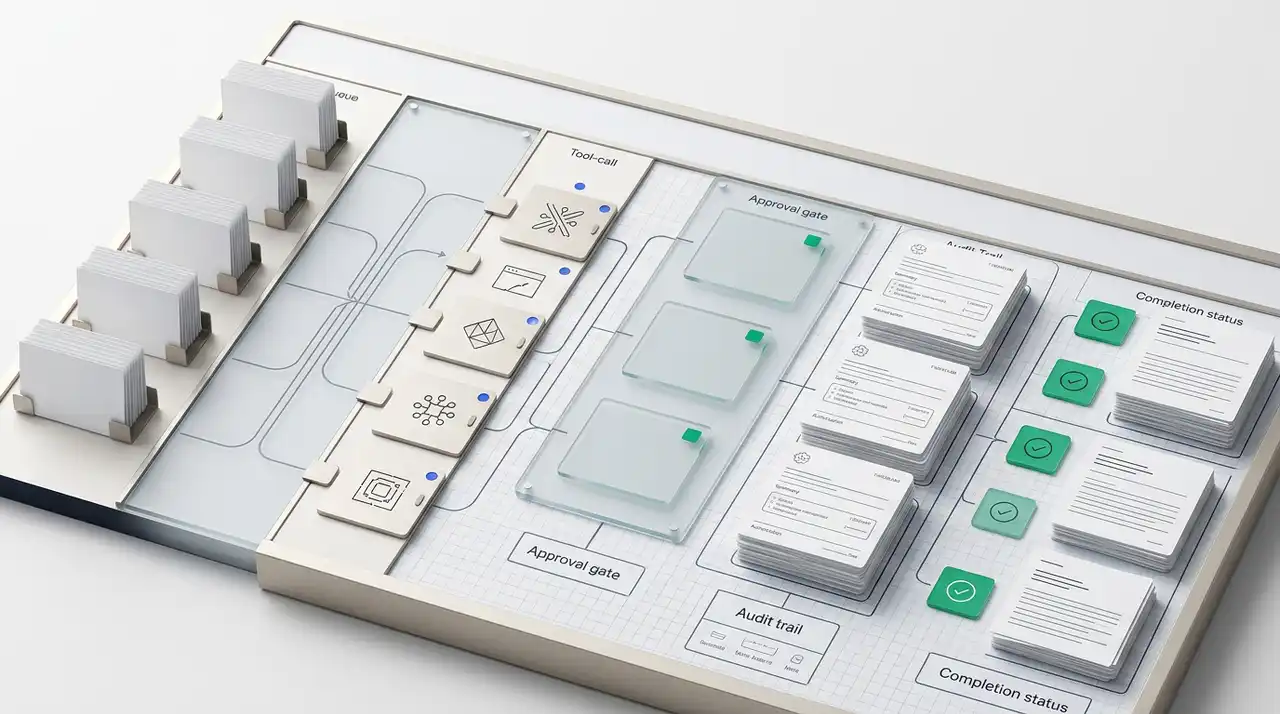
Enterprise platforms now use trust layers that prevent AI models from retaining sensitive corporate data. These systems also include audit logs for every action an agent takes.
Will agents replace my human employees?
Agents are designed to handle repetitive, high-volume tasks. This allows human employees to focus on strategy, complex relationship management, and creative problem-solving.
Key Takeaways
- Focus on implementation choices, not hype cycles.
- Prioritize one measurable use case for the next 30 days.
- Track business KPIs, not only model quality metrics.
Sources
- Enterprise AI Agents: Salesforce, ServiceNow, Microsoft 2026 - Planetary Labour, 2026-03-12
- Global AI Agents Market Forecast and Trends - MarketsandMarkets, 2026-03-22
- Salesforce Community Events and Agentforce Readiness - SF Ben, 2026-03-05
Sources
- Enterprise AI Agents: Salesforce, ServiceNow, Microsoft 2026 - Planetary Labour, 2026-03-12
- Global AI Agents Market Forecast and Trends - MarketsandMarkets, 2026-03-22
- Salesforce Community Events and Agentforce Readiness - SF Ben, 2026-03-05
Next step
Book an AI Systems Review
Bring us one workflow, one constraint, and one metric. We will help you decide what is worth building.
Book an AI Systems ReviewRelated Capabilities
AI Systems & Automation
AI Agent Development
Workflow agents that use tools, update systems, and ask for approval before sensitive actions.
Enterprise Knowledge
Document Intelligence & Extraction
Extract, classify, summarize, compare, and validate information from PDFs, invoices, contracts, forms, and resumes.