A morning briefing run by AI agents for Madan Mohan Gradings.
Published · Updated
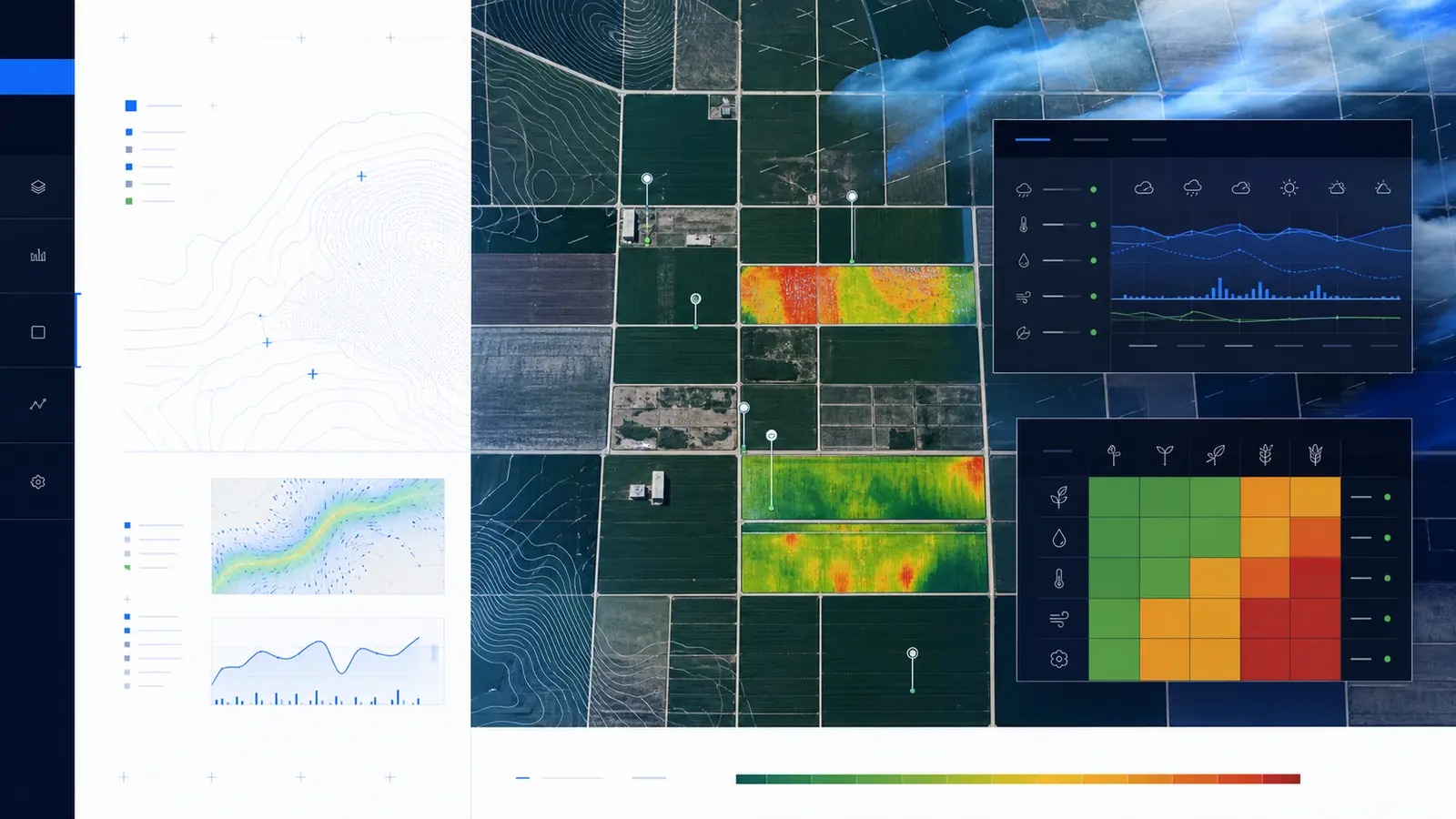
Madan Mohan Gradings, producer of Swastik Brand Aata and Kakaji Brand Wheat, had the raw material for better decisions: daily sales, distributor movement, branch performance, and regional demand patterns. What they did not have was a reliable way to turn that data into the next morning's plan. Forecasting, distributor prioritisation, and expansion planning still depended too heavily on instinct.
Deliver a system that reads the latest sales data each night and gives leadership three things by morning: where demand is moving, which distributors should be prioritised, and which regions deserve the next push, with the evidence visible on click.
What shipped
From spreadsheets to a 4am briefing
Before this project, the morning meeting started with someone opening a spreadsheet. Now it starts with a dashboard. Every night at 04:00 IST, the system reads the previous day's sales, refreshes the forecast, and publishes a short briefing: demand by region and SKU, distributor priority, and expansion signals. By the time leadership sits down, the first version of the plan is already there.
How the agents actually decide
The forecasting agent looks at last year's seasonality, this week's sales velocity, and external signals (festival calendars, weather) to predict demand at the level of SKU × region × week, not a single national number, but the specific picture each branch needs. The distributor agent takes that forecast and ranks distributors by reliability, payment history, regional fit, and current capacity, so the most demand goes to the partners most likely to deliver.
Every recommendation is auditable
An executive can click any distributor in the ranking and see exactly why the agent placed them where it did, the on-time rate, the payment history, the capacity signal, the regional fit score. No black boxes, no "the system says." If a recommendation looks wrong, the evidence trail is right there to inspect.
What it looked like in action
Representative mockup using anonymized sample data. The interaction patterns reflect the production flows; names, amounts, IDs, and dates are illustrative.
Business outcomes
Technical work demonstrated
The systems and controls behind the story above.
Compliance-aligned data pipeline
The full ingestion-to-output pipeline was designed against enterprise controls for confidentiality, integrity, and availability.
Scheduled, version-controlled ingestion
Cleaning and merging runs on a managed schedule inside a private network, version-controlled, monitored, and re-runnable on any historical day.
Multi-signal demand forecasting
Forecasting models combine seasonality, sales velocity, and external signals (festival, weather) at SKU × region × week granularity.
Context-aware risk modelling for distributors
A scoring model ranks distributors on on-time rate, payment history, regional fit, and live capacity, re-trained as new outcomes land.
Drift monitoring with auto-recalibration
Forecast accuracy is tracked continuously. When it drops below threshold, the system alerts engineers and queues a recalibration run.
Role-based access and immutable audit logging
Branch managers see only their authorised regions; every distributor decision is recorded immutably so executives can replay the evidence behind any pick.
Architecture
Cleaning the data first
Sales data was fragmented across systems. A managed nightly pipeline cleans, structures, and merges those streams into a single encrypted dataset inside a private network, no agent ever touches raw, untrusted input.
Two specialised agents
A forecasting agent that produces SKU-by-region demand predictions, and a distributor agent that consumes that forecast and ranks partners. They share state, but they do different jobs, and they can be tuned independently.
Geolocation routing for expansion
A spatial layer crosses sales density with logistics cost to point at specific districts and pin codes where new push will pay back fastest, surfaced directly into the executive dashboard.
Enterprise-grade controls
The full ingestion-to-output pipeline was designed against enterprise controls for confidentiality, integrity, and availability.
Immutable audit logging
Every distributor-prioritisation decision is recorded immutably; executives can trace exactly why a given distributor was chosen.
Drift monitoring
Forecast accuracy is tracked continuously. When it drops below threshold, the system alerts engineers and queues recalibration.
Role-based access
Dashboard and raw-data access is restricted by geography, so branch managers see only their authorised regions.
Where this proof applies
This case study supports the solution and service pages below because the same workflow, controls, and handoff model are visible in the implementation.
Solution pages
Operations
Cross-functional handoffs, queue prioritization, process monitoring, and exception routing for operating teams.
View solutionManufacturing
Supply chain visibility, demand planning, supplier-risk review, inventory exceptions, and shop-floor knowledge workflows.
View solution