Beyond the Black Box: Building Observability for Agentic AI Systems
For many founders and sales leaders, the primary barrier to deploying AI agents isn't a lack of capability-it's a lack of trust. When an AI system moves from being a simple chatbot to an agentic workflow that can update a CRM, research a lead, or triage a support ticket, it stops being a novelty and starts being a liability if you cannot see exactly why it made a specific decision.
If you cannot audit the "thought process" of an agent, you cannot fix it when it fails. This is the core challenge of agentic AI observability. At Quellix Labs, we treat observability not as an add-on, but as a core delivery standard. Whether we are building an AI Agent or a Predictive Analytics model, the ability to trace, verify, and govern the system is what separates a prototype from a production-ready asset.
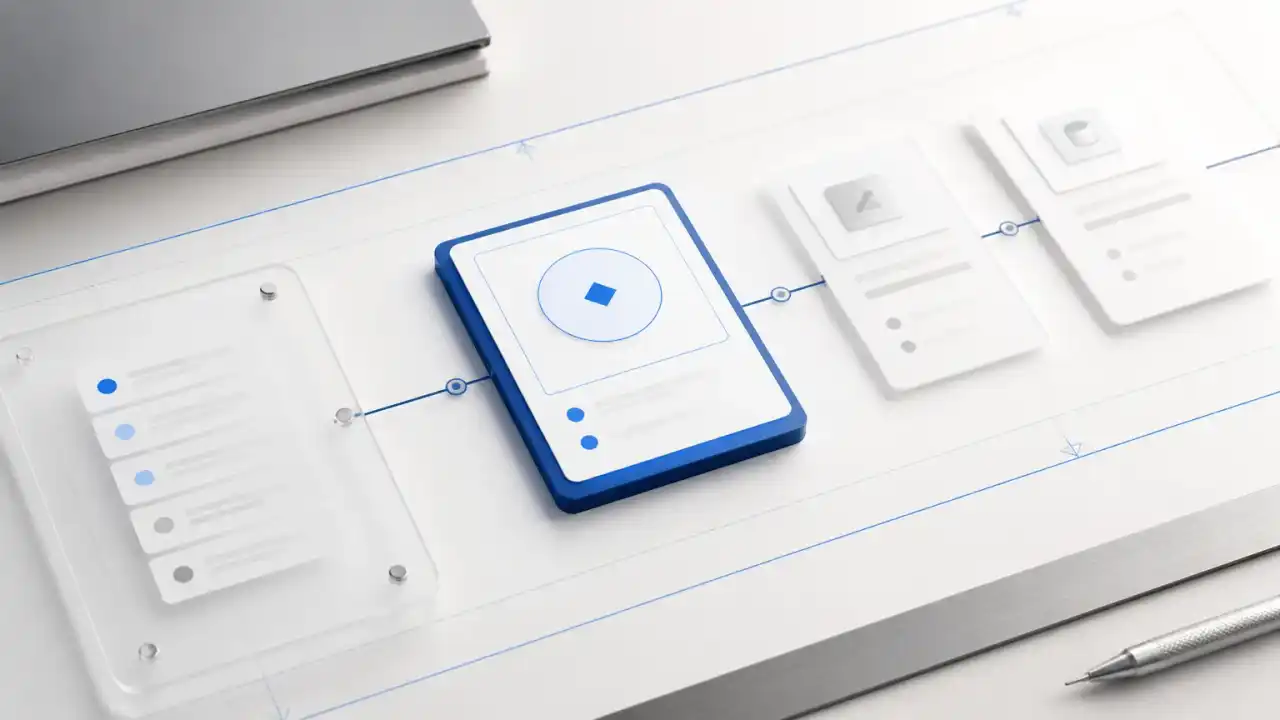
Step-level logging for agentic systems
Step-level logging records each retrieval, tool call, decision, approval, fallback, and output in an agentic AI workflow. It is necessary because a final answer alone does not explain how the agent reached it or where it failed.
For production reliability, logs should show the selected sources, applied filters, tool inputs, tool outputs, reviewer actions, and final system update. That evidence is what lets teams debug failures and evaluate whether the agent is safe to expand.
The Observability Gap: Why Traditional Logs Fail
In traditional software, if a system fails, you look at the logs. You see a 404 error or a database timeout. In agentic AI, a "failure" might look like a perfectly formatted email sent to the wrong person, or a lead scored as 'High Intent' based on a hallucinated LinkedIn profile. The system didn't "crash"; it reasoned incorrectly.
Traditional monitoring focuses on uptime, latency, and throughput. Agentic observability focuses on intent, reasoning, and tool use. The practical starting point is a trace. OpenTelemetry's trace documentation describes a trace as the path of a request through an application. For an AI agent, that path needs to include the model request, the selected tool, the returned evidence, the proposed action, the verification result, and any human override. The final response matters, but the path explains why the response can be trusted.
For a business operator, this means you need a window into the "review-gated execution" loop. You need to know:
- What did the agent think the user wanted?
- What tools (CRM, Search, Internal Docs) did it choose to use?
- How did it interpret the data it retrieved?
- Did it verify its own answer before presenting it?
The Implementation Path: Building the Trace-Based Operating Model
To move from a black box to a transparent system, we implement a multi-layered observability architecture. This isn't just about dashboards; it's about creating a feedback loop that improves the system over time.
1. Step-Level Tracing
Every agentic workflow is broken down into discrete steps. Instead of one long log entry, we use "trace-based testing" to see the sequence of events. The emerging OpenTelemetry semantic conventions for GenAI agent spans make this more concrete by defining agent-oriented attributes for observable operations. The exact implementation will vary by stack, but the operating principle is stable: capture enough structure to pinpoint where a multi-step workflow went off the rails. For example, in an automated lead research workflow, tracing would show if the agent failed at the "Search" phase or the "Synthesis" phase.
2. The Verification Gate
We don't just let agents act blindly. We build a "Verify" step into the loop. This can be an automated check-where a second, smaller model audits the first model's output against a set of business rules-or a human-in-the-loop (HITL) trigger. For high-stakes decisions, like renewal risk alerts or inventory adjustments, the "Action" only happens after a human operator hits "Approve" in the observability dashboard.
3. Semantic Monitoring
We monitor for "drift" in how the agent interprets language. If your customers start using new terminology or if your internal product documentation changes, the agent's performance might degrade. Semantic monitoring alerts us when the agent's confidence scores drop, even if the system is technically "up."
Workflow Example: Automated Support Triage
Consider a support triage system we might build for a B2B SaaS company.
The Workflow:
- Input: A customer sends a complex technical ticket.
- Reason: The agent identifies the customer's tier, the product module involved, and the likely sentiment.
- Act: The agent searches the internal knowledge base and drafts a response while flagging a developer in Slack.
- Verify: The system checks the draft against the "Company Voice" guidelines and ensures no sensitive API keys are in the text.
The Observability Layer: A support lead can log into a dashboard and see a "Reasoning Trace." They see that for Ticket #402, the agent correctly identified the module but failed to retrieve the latest documentation update. Because this failure is visible, the team can update the knowledge base indexing immediately. Without observability, the agent would simply keep giving outdated advice until a customer complained.
Risks, Limits, and When Not to Build
While agentic AI is powerful, it is not a silver bullet. There are specific scenarios where the complexity of building an observable system outweighs the benefits.
The Cost of Over-Monitoring
Detailed tracing and multi-model verification add latency and cost. If you are building a low-stakes internal tool-like a bot that summarizes lunch menus-you don't need a high-end observability stack. Over-engineering observability for trivial tasks is a common waste of resources.
The "Human-in-the-Loop" Bottleneck
If your workflow requires a human to verify every single step, you haven't built an agent; you've built a complicated UI for a manual process. We recommend increasing autonomy only after the agent passes representative evaluations and the remaining review burden is materially lower than the original process. Observability should provide evidence for that decision rather than act as a substitute for review.
High-Stakes Legal or Medical Decisions
Currently, we advise against fully autonomous agentic workflows in areas where a single error could result in significant legal liability or physical harm. In these cases, the AI should remain in the "AI assistant" or "Search & Knowledge Base" category, providing cited information for a human expert to act upon, rather than taking actions itself.
The Decision Framework: Is Your Workflow Ready for an Agent?
Before investing in a build, we ask our clients to evaluate their proposed workflow against three criteria:
- Is the data accessible? An agent is only as good as the tools it can reach. If your CRM data is siloed and messy, the agent will reason based on bad data.
- Is there a clear definition of 'Correct'? If three different human experts would give three different answers to the same prompt, an AI agent will struggle to find a baseline for verification.
- What is the cost of a 'Silent Failure'? If an agent fails and you don't notice for a week, what is the damage? If the damage is catastrophic, you need a robust, multi-layered observability stack from day one.
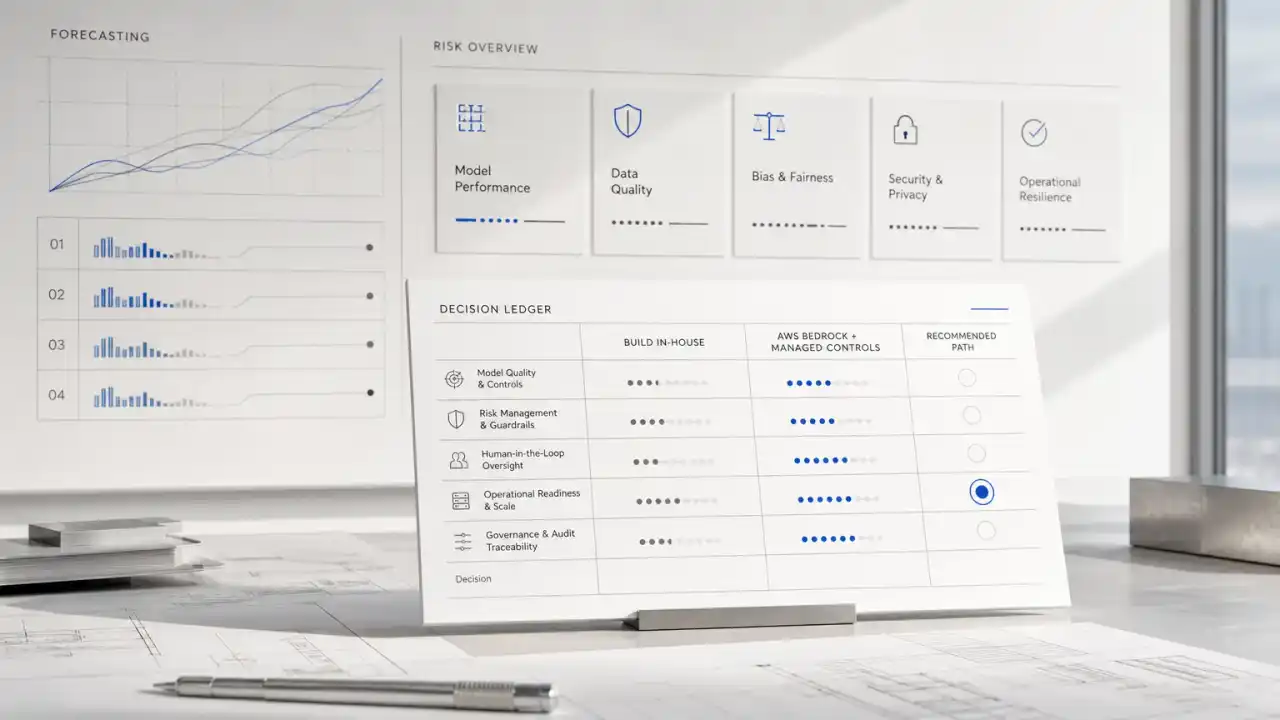
The NIST AI Risk Management Framework is a useful boundary here: risk management belongs across design, deployment, use, and evaluation. In practical terms, observability is not a dashboard added after launch. It is the evidence layer that lets a team inspect behavior, review exceptions, and decide whether a workflow has earned more autonomy.
Moving Forward with Confidence
Building an agentic system without observability is like flying a plane without a cockpit. You might stay in the air for a while, but you have no way of knowing when you're off course or how to land safely.
At Quellix Labs, we help companies build AI systems that are transparent by design. We focus on creating workflows where every action is backed by a visible reasoning chain, allowing you to scale your operations without losing control.
If you are evaluating a specific workflow-whether it's automating sales research, triaging complex support data, or extracting insights from thousands of documents-the first step is defining how you will watch the system work.