Anthropic released Claude Opus 5.5 on September 22 with a price story that deserves a closer look than a single discount percentage. The standard API rate is now $4 per million input tokens and $20 per million output tokens, down from $5 and $25 for Opus 5. Cache reads fell from $0.50 to $0.20 per million tokens. Anthropic estimates that a typical workload at default settings costs 40% less to run, but that estimate depends on how much of the prompt is reused and how efficiently the model completes the task. The published token rates themselves fell 20% for ordinary input and output, and 60% for cache reads. Anthropic's launch announcement gives the workload estimate; its model documentation lists the rates.
That distinction matters if you are buying inference for a production workflow. A coding agent that repeatedly sends the same repository context may have a very different bill from a one-shot document analysis job. A team should price its own traces before promising a 40% saving to its finance lead.
The price reduction has three layers
For a simple, uncached illustration, suppose a job uses 10 million input tokens and one million output tokens over a month. At Opus 5 list rates, the token charge would be $75: $50 for input and $25 for output. At Opus 5.5 rates, it would be $60: $40 plus $20. That is a 20% reduction. It is an illustration of token billing, not a forecast for any particular organization; tools, platform charges, and the number of calls can change the total.
Now consider repeated context. A large codebase map, policy bundle, or document collection may be sent in a stable prefix across many turns. With a valid cache hit, each million cached input tokens costs $0.20 on Opus 5.5, compared with $0.50 on Opus 5. The saving on those reads is 60%. Cache creation still has a charge: Anthropic lists $5 per million tokens for a five-minute cache write and $8 for a one-hour write on Opus 5.5. The cache has to be reused enough times to recover that write cost. Anthropic's pricing explanation gives the write and read rates.
The third layer is the work the model does per outcome. Anthropic reports faster output generation and examples where Opus 5.5 completed the same coding work in fewer turns. Those are vendor and early tester observations, useful as a reason to test but insufficient to predict your own task completion rate. If a run needs fewer retries, fewer tool calls, and fewer output tokens, the effective price per completed job can fall more than the per-token rate suggests. If it needs more human corrections, the apparent token saving can disappear. The relevant denominator is a verified completed task, not a million tokens in isolation.
A workflow for deciding where Opus 5.5 belongs
Start with a narrow job that already has a clear end state. For example, ask an agent to update one service integration after an upstream API change. Give it a pinned repository revision, the relevant vendor documentation, tests it can run, and a rule that production deployment needs approval. Capture the same inputs and success criteria for Opus 5 and Opus 5.5.
Then compare full runs. Record input, cached input, cache writes, output, tool calls, elapsed time, test results, and reviewer corrections. A run that finishes in fewer turns is valuable only if the final patch is correct and does not quietly widen scope. Count failed and retried runs in the cost per accepted change. Include the human time spent reviewing and repairing each result. The new model may change the amount of context it needs, so keep the task fixed without insisting that every internal step be identical.
Caching deserves its own test. Put stable instructions and source material in a reusable prefix, keep volatile task data near the end, and inspect actual cache-hit telemetry. Do not assume that repeated text was charged at the cache-read rate merely because two prompts look similar. A long-lived agent with changing tool results can invalidate parts of its prefix. Conversely, a predictable document review pipeline might get strong reuse with little engineering effort. The break-even point follows from the number of genuine hits, cache-write duration, and the workload's actual token mix.
Context reuse and accepted work

Finally, test the migration behavior as well as the economics. Anthropic's Opus 5.5 migration notes say thinking cannot be disabled, forced tool use can error, and some existing computer-use integrations need an update. A model ID swap inside an agent is therefore not always a safe rollout plan. Run representative tool paths in staging and retain a rollback route until the new behavior is understood.
What the lower price can make practical
At these rates, a stronger model can be justified for review-heavy steps that were previously too expensive to run on every item. Think of a repository change that needs a second pass through vendor docs and test failures, or a complex contract extraction that needs a reasoned exception note for a human reviewer. The saving buys more room for targeted checking. It does not justify indiscriminate extra calls.
A useful design is to give the expensive model the judgment-heavy segment of a workflow. A cheaper model or conventional code can route, deduplicate, and validate straightforward inputs. Opus 5.5 can handle the cases where the policy has several interacting conditions, the evidence is conflicting, or a proposed action needs careful explanation. The final write to a CRM, billing system, or production repository should still sit behind the same authority and approval boundary that existed before the price cut.
There is also an opportunity to revisit workflows that were rejected on cost a few months ago. A nightly review of failed support escalations may become affordable when context reuse is high. But rerun the business case with current volume and measured cache hits. The cost of ingesting documents, storing evidence, monitoring quality, and handling exceptions remains part of the system even if inference becomes cheaper.
The most promising use of the discount is often reliability work. Spend some of the saving on an independent check, a better evaluation set, or a reviewer view that shows exactly which files and sources informed a decision. In a long-running agent, the model's ability to continue for many turns magnifies both good judgment and mistakes. Lower token cost makes more verification possible, but verification must be designed into the workflow.
Risks and limits before a production switch
The 40% workload estimate is Anthropic's, not a guaranteed invoice reduction. It combines rate changes with its assumptions about typical usage. A team with mostly uncached one-shot prompts starts from the 20% standard token-rate cut. A team with a high share of cached reads may see a larger rate benefit. Output volume, cache-write costs, tool charges, retries, and deployment platform can move the result in either direction. Subscription usage limits are a separate product question from API token prices; the two should not be presented as interchangeable discounts.
Model behavior matters just as much. Opus 5.5 has always-on adaptive thinking, and the documentation lists migration changes around tool choice and thinking blocks. Review any application that parses intermediate model output, relies on a forced tool selection, or displays progress text between tool calls. A silent progress panel can be a user-facing regression even if the final answer is correct. Safety refusals and fallback behavior also need to be tested for the organization's real tasks.
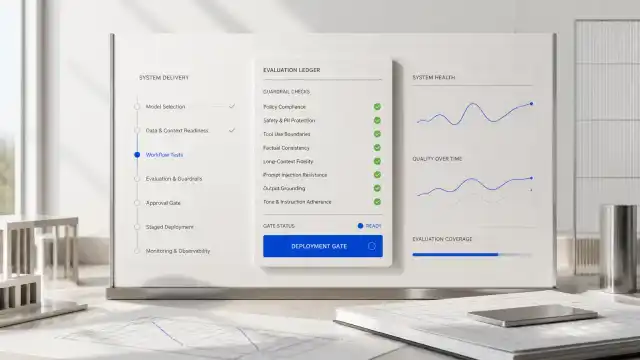
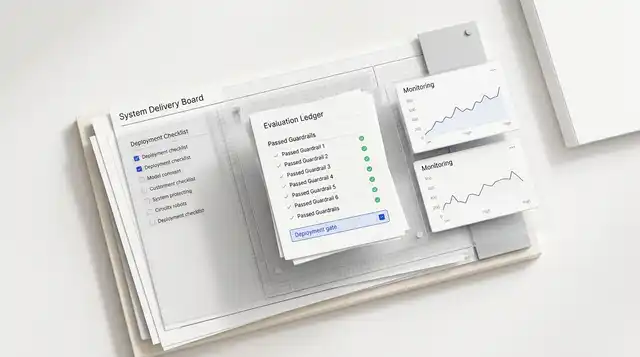
Do not compare models from a screenshot of a single benchmark or a vendor quote. Build an evaluation set from your own accepted work: routine cases, edge cases, failures from the last release, and tasks that require escalation. Set a minimum quality bar first. Only then compare cost and latency among the candidates that meet it. That is especially important for work where an incorrect output creates a downstream correction cost far larger than the model bill.
Where Quellix Labs would start
For a client considering Opus 5.5 in an agent or document workflow, we would begin with a small trace set and a clear operating boundary. We would separate repeatable context from per-task data, measure cache behavior, and price complete accepted outcomes. We would include the migration cases that can break an existing integration, then stage the model behind a reversible route. The result should be a decision record with quality, latency, and total workflow cost in one place.
The price cut is useful because it changes the room available for careful systems engineering. It is most valuable when the saved cost funds stronger checks around a genuinely valuable task. If your team has a workflow where the model bill or repeated context has been the obstacle, talk to an AI engineer about measuring it against the new rates before changing the production route.