OpenAI released GPT-6 Sol and GPT-6 Luna on September 22, 2026. Both are available through the API, and both bring lower list prices than their GPT-5.6 counterparts. For standard processing and prompts with up to 272,000 input tokens, Sol costs $2 per million input tokens, $0.20 per million cached input tokens, and $10 per million output tokens. Luna costs $0.10, $0.01, and $0.50 respectively. These are OpenAI's published launch rates, not a blended estimate for a finished workflow.
The price change is striking, but the practical choice is not simply which model has the lowest token rate. Sol is positioned for complex coding and agent workflows; Luna is intended for focused, high-volume work. A useful production system may use both, with conventional validation and a human approval boundary around actions that matter. OpenAI's model guidance treats task difficulty, latency, and cost as inputs to that decision.
What the rate card actually says
GPT-5.6 Sol's current promotional rate is $4 per million input tokens and $20 per million output tokens. GPT-6 Sol halves both to $2 and $10. Its cached input rate also falls from $0.40 to $0.20. A hypothetical month with ten million uncached input tokens and one million output tokens would therefore move from $60 to $30 in model-token charges, assuming the same usage and no other charges. That is a 50% reduction for the same token mix. The GPT-5.6 Sol model page states the promotional baseline.
Luna's published comparison needs slightly more care. GPT-5.6 Luna lists $0.20 input, $0.02 cached input, and $1.20 output per million tokens. GPT-6 Luna lists $0.10, $0.01, and $0.50. Input and cached input are half the earlier rates, while the listed output rate is about 58% lower. For a bill estimate, use the individual rates and your actual input-to-output mix instead of applying a blanket percentage to the previous invoice.
For example, ten million uncached input tokens plus one million output tokens would cost $3.20 at GPT-5.6 Luna rates and $1.50 at GPT-6 Luna rates. That is about 53% less for this particular mix. The example does not say anything about answer quality, retry frequency, web-search charges, or how many tasks your system can finish. It only prices the stated tokens.
The rates also have boundaries. OpenAI says prompts above 272,000 input tokens are billed at higher input, cache, and output multipliers for the full request. Batch and Flex processing are listed at half of Standard rates, while Fast mode costs more. Regional processing can add a premium where available. If a proposal quotes the short-context Standard price, its workload design should match that tier. The Sol and Luna model pages spell out these conditions.
A workflow for choosing Sol, Luna, or both
Imagine an internal support operation that receives thousands of product tickets. Many need a short classification and a link to the right runbook. A smaller number describe a new failure, involve conflicting evidence, or request a change to a customer account. Using Sol on every message may waste money. Using Luna to make every account decision may put too much judgment on the cheapest step.
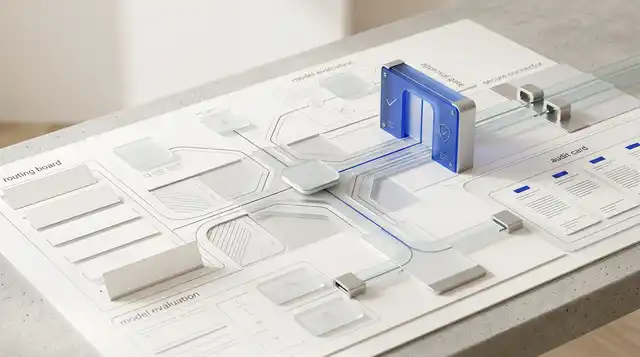
A sensible first version routes the incoming ticket through a bounded classifier. Luna can identify the product area, extract a small set of fields, and flag uncertainty. Deterministic checks reject malformed records and require a source reference for any suggested answer. Straightforward tickets can enter a normal review queue. Complex or high-impact cases can go to Sol with the relevant history and runbook excerpts. An account change still requires an authorized person or a narrowly scoped policy to approve the write. The model price cut makes this routing easier to afford; it does not replace the policy.
Route by task and risk

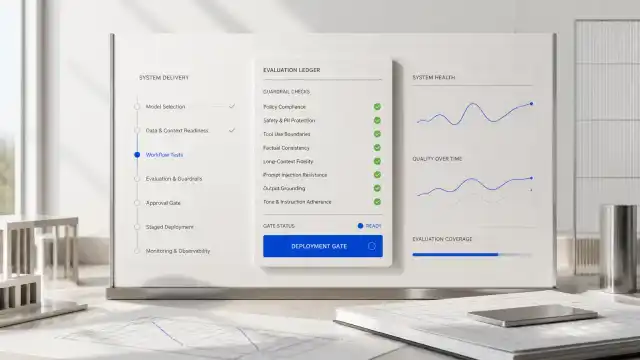
To validate the design, take a representative sample of real tickets and label the desired outcome. Include cases that a previous system mishandled, especially ambiguous ownership, missing documentation, and a customer asking for an action outside the approved tool scope. Run the same sample against Luna, Sol, and the routed combination. Measure accepted outcomes, escalations, correction time, latency, and total cost. Record both token use and any tool charges. That is a more useful comparison than a single model response judged by fluency.
One subtlety is reasoning effort. Both GPT-6 Sol and Luna support multiple effort levels, and their defaults may not match an older integration's settings. A cheaper token rate can still produce a higher bill if a new configuration uses more reasoning or generates longer answers. Keep the evaluation's effective settings explicit and test the settings users will actually run. OpenAI's model pages describe the supported reasoning controls and API interfaces.
The price cut changes iteration economics
The strongest argument for lower inference prices is not that every existing job instantly costs half as much. It is that teams can afford to test more candidate prompts, compare more task examples, and add targeted checks to production flows. A nightly triage job with a few thousand items may now have room for a second pass on uncertain cases. A development assistant may be able to inspect a failing test and the upstream documentation before proposing a patch, rather than stopping at the first plausible explanation.
Those extra calls should be earned. A second model pass is worthwhile when it demonstrably catches a failure that matters. Running two models on every routine record because each call is cheap still increases cost and can add disagreement without improving decisions. Treat the new price as a budget for measured improvements, not an invitation to add unobserved agent loops.
Caching has a similar trade-off. Sol's cached input costs $0.20 per million tokens, and Luna's costs $0.01. If many jobs share a stable instruction and reference prefix, cache hits can make a significant difference. But prompt composition, prefix changes, and cache writes affect the realized saving. Inspect usage records rather than estimating from the size of repeated documents alone. For long context, also check whether the request crosses the pricing threshold. A large context window is a capability, not proof that the largest prompt is the best design.
Teams with an existing GPT-5.6 Sol deployment should also distinguish a price comparison from a migration decision. The old promotional price is documented through at least November 21, 2026, but the new models may behave differently on tools, formatting, and edge cases. A staged rollout with a pinned evaluation set gives you a reversible way to compare the actual service. Do not replace a model name in a critical workflow and infer success from the first successful API response.
Risks and limits in a real budget
The token table is only one line item. Built-in tools such as web search have their own charges, and external connectors, storage, observability, and human review can outweigh inference for some workflows. A cheap model that sends more cases to manual correction may be more expensive per accepted outcome. A stronger model that reduces retries can sometimes be the economical choice despite a higher rate per token. Measure the whole task.
Quality thresholds should come before savings targets. For a public response, the threshold may include cited source support and a low rate of misleading answers. For a coding change, it may include passing tests, scoped diffs, and an engineer's review. For a finance or customer record, it should include authority checks and a trace of what changed. If Luna misses the bar on a class of work, send that class to Sol or a human instead of relaxing the bar to match the new price.
Finally, keep time-sensitive pricing out of permanent product promises. The figures here are the published API rates checked on September 23, 2026. Processing tiers, regional requirements, and provider rates can change. A business case should retain the date, source links, workload assumptions, and a sensitivity range so it can be refreshed without rewriting the architecture.
Where Quellix Labs would start
We would first map the workflow into routine, ambiguous, and consequential steps. Then we would sample actual tasks, define an acceptance test for each class, and compare Luna, Sol, and a routed approach on cost per accepted outcome. The production design would keep tool permissions narrow, make uncertainty visible, and preserve a human decision point for material writes. Only after those results would we commit to a default model and budget.
The lower prices make a wider range of AI systems viable, especially when the work repeats often. The decision still starts with the job that must be done and the evidence needed to trust it. If you are revisiting a workflow that failed an earlier cost test, talk to an AI engineer about a measured pilot using the new rates.