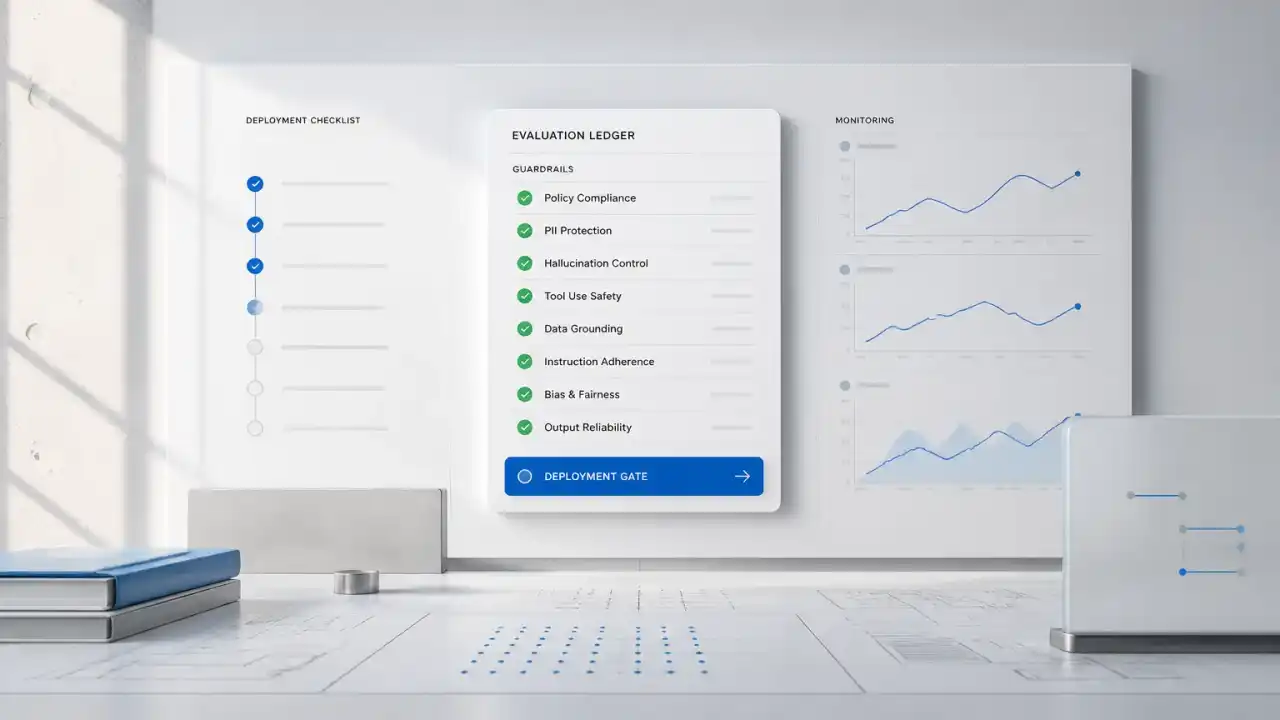
Google's new Gemini agent makes enterprise integration a timely engineering question: which identity acts, what it may access, and what must happen before it changes a business record. A managed agent platform can provide useful controls, but the connected application still has to validate the actual operation.
On October 8, 2026, Google announced the Gemini agent, describing persistent execution, tools and skills, multiple model choices, and enterprise governance. The announcement points toward agents working across business systems rather than remaining inside a chat window. Teams should confirm which capabilities their tenant, plan, and region support before designing around the whole announcement.
The practical opportunity is a contained integration that finishes a specific piece of work. Consider preparing a renewal review from CRM records, support history, and account documents. The agent might collect evidence and draft a brief. Updating the account or contacting the customer introduces a separate set of permissions and consequences.
When this needs an AI build
Start when employees repeatedly assemble the same information across systems before an accountable decision. A renewal manager might spend time locating unresolved support issues, checking the contract, and finding the latest account activity. If those records are available through reliable interfaces, an agent can prepare the review packet.
A custom integration becomes useful when the ready-made experience does not cover the source systems, evidence requirements, or action boundaries. Check the existing product first. If it already provides the required retrieval and draft workflow with suitable controls, configuration may be enough.
Before building, name the first deliverable and the owner who accepts it. "Prepare a renewal review with links to the permitted records" is testable. "Manage our customer accounts" hides several distinct tasks and approval decisions. Keep the first release narrow enough that an incomplete packet can be recognized and returned for repair.
What the announcement establishes
Google describes agent identities, propagated authorization, sandboxing, network controls, audit records, and spending controls as parts of its enterprise approach. These are platform capabilities and announced design directions, not evidence that your CRM connector enforces every rule your business needs.
A team using delegated user access must decide what happens when that user leaves a group or loses access while a task is running. A task operating under its own identity needs an owner and a deliberately limited grant. Neither arrangement should quietly use a broadly privileged integration account to fill missing permissions.
The key implementation question is how the authority reaches the destination. The CRM should receive a request it can authorize for the intended operation, rather than trusting that a model chose a plausible action. Preserve the requesting user, acting identity, target record, and approved change in the action record.
Google's announcement is a reason to examine these integration choices. It is not a reason to remove controls already protecting the source systems.
Integration architecture: keep three boundaries distinct
In the renewal example, separate access to evidence, access to tools, and permission to change records. A user may be allowed to read a support history while being unable to alter a commercial field or send a renewal proposal.
| Boundary | Question the system must answer | Example control |
|---|---|---|
| Evidence access | May this requester see the source record? | Source permissions and identity-aware retrieval |
| Tool access | May this agent call this operation? | Gateway policy and a narrowly exposed tool |
| Business action | Is this exact change valid and approved? | Destination validation, approval binding, and result verification |
A tool call can pass the network gate and still fail the business rule. A permitted CRM update might target the wrong customer, contain an obsolete status, or overwrite a field that changed after review. The application must check those conditions using the current record.
The evidence packet should also retain its limits. If the support connector returns only part of the history, the agent must not turn that into "no unresolved issues." Carry the coverage state alongside the retrieved records so the reviewer can see what was checked and what remains unavailable.
A permitted route to the CRM is only the start of the action path. Before applying a change, the integration should verify the customer, compare the current record with the reviewed version, and confirm that approval covers the exact proposed update.
Reviewed and current record versions

What an agent gateway can control
Google's Agent Gateway overview describes controls for traffic entering an agent and calls leaving it toward tools. These network boundaries help teams govern the integrations exposed to an agent.
Its documented Gemini Enterprise integration currently covers egress. That distinction matters: do not present an outbound gateway policy as proof that every inbound interaction has the same protection. The overview also describes a default-deny posture when no matching access policy allows a request.
For a custom renewal tool, expose a narrow operation that creates a draft review record rather than a generic method that can modify arbitrary CRM fields. The gateway can restrict access to that operation, while the service validates the requester, target account, payload, and permitted state transition.
Keep the policy inventory small enough to review. A tool registry with clear ownership and versioning is easier to govern than a large collection of convenient endpoints whose behavior changes behind the same name.
Policy scope matters during setup
Google's gateway setup guidance makes project, location, and supported configuration choices part of the setup. Plan those choices around the deployed integrations instead of treating the gateway as one universal switch.
Map the actual path of a request: the agent runtime, gateway, destination service, and identity checks. Confirm which calls traverse the governed path and which components can reach the destination through another route. A policy that protects one connector does not establish coverage for every tool.
Test the permitted path and the rejected paths. Try the wrong acting identity, an unavailable tool, an unsupported operation, and a destination outside the intended scope. Include a case where the integration loses authorization after the task begins. The test should show a clear stop or escalation, not an attempt to finish through another credential.
Keep configuration and business validation tests separate. The first shows that access policy applies; the second shows that a permitted request cannot make an invalid change. Both are necessary before enabling actions.
Long-running work needs durable business state
The announcement describes work that continues across sessions. For a renewal review, that can mean gathering records, waiting for an account owner, and returning to a proposed CRM update later. The intervening time changes what the system must check.
Suppose the manager approves the draft on Monday, and the account changes on Tuesday before the agent applies it. The approval should refer to the reviewed fields and record version. Recheck the destination state and require a new decision when the material facts change.
A network timeout creates a different problem. If the CRM may have accepted the request, retrying blindly can duplicate an action. Give the operation a stable identifier and reconcile with the destination before trying again. When the outcome remains uncertain, record that uncertainty and preserve the task for human review.
Persistent memory is useful for continuity, but it should not become the source of truth for account state. Retrieve the current record for the action and keep operational state in a system that supports explicit updates, audit history, and recovery.
Risks, limits, and a useful first rollout
The easiest failure to overlook is a correct-looking brief with incomplete evidence. If the agent cannot establish which records it saw, a reviewer may approve a change based on a false impression of coverage. Make missing permissions, partial connector results, and conflicting sources visible.
Another risk is expanding authority because the first draft workflow worked. Reading account information and sending a customer message require different evaluation. Add writes by operation, with explicit owners and rollback paths, instead of enabling broad autonomy for an entire department.
Spending controls also need a business-level view. A platform cap can stop further model use without resolving a half-finished CRM action. Define what happens when a task exhausts its budget: preserve the evidence, state the incomplete step, and transfer ownership rather than silently abandoning the case.
Start in draft-only mode, then evaluate a single reversible write if it is justified. Compare review effort, accepted packets, permission failures, unsupported claims, and completed outcomes with the existing process. Track where failures originate so a source-data issue does not get misdiagnosed as a model issue.
What Quellix would build
Our custom AI agent development service would map the renewal review from evidence to decision. We would identify the permitted CRM and support data, the acting identity, the review owner, and the exact output the first release must produce.
The implementation would include connectors with coverage status, a draft review record with source links, narrowly defined tools, approval tied to the proposed change, and a recovery path for uncertain destination results. Gateway policies would be tested against the deployed path and the platform's documented scope.
If the core problem is finding current account knowledge, enterprise AI search and RAG implementation may be the first component. Bring one review task, its current evidence sources, and the accountable decision-maker. We can then assess whether product configuration covers it or whether a custom integration has a clear role.
FAQ
Does a managed agent remove the need for custom integration code?
It can cover orchestration and platform controls, but the destination still needs to validate the operation, record state, and business rules. Use custom code where the existing product does not enforce that contract.
Does permission to call a tool authorize every change it can make?
No. The service must validate the specific target and proposed change. A narrow tool reduces the authority exposed, and the destination remains responsible for its own rules.
Can the gateway protect every part of the Gemini workflow?
Check its documented scope. The current overview describes egress integration for Gemini Enterprise. Confirm the deployed traffic path and supported configuration rather than assuming blanket coverage.
What should happen when approval becomes stale?
Recheck the relevant source and destination versions. If the proposed action or material facts changed, stop and obtain a new decision instead of applying the old approval to different work.