Knowledge Retrieval Architecture: Choosing Between RAG and Fine-Tuning for Enterprise AI
Every enterprise leader eventually hits the same wall: the Large Language Model (LLM) that seemed brilliant in a demo is suddenly useless when asked about a specific Q3 internal project or a proprietary technical manual. It hallucinates a generic answer or, worse, confidently states a falsehood. The immediate reaction from technical teams is often, "We need to train the model on our data."
In the world of B2B AI, this is the fork in the road between Fine-Tuning and Retrieval-Augmented Generation (RAG). Choosing the wrong path is an expensive mistake that results in months of wasted engineering time and a system that still fails the basic test of accuracy. At Quellix Labs, we see this most often when companies attempt to build internal AI search or automated support triage without a clear understanding of the 'Open Book' vs. 'Memorization' trade-off.
RAG vs fine-tuning, explained
RAG is usually better for enterprise AI search when answers must use current documents, citations, permissions, and frequent source updates. Fine-tuning is better when the goal is to change model behavior, tone, classification patterns, or domain style rather than retrieve live knowledge.
For Azure OpenAI or similar enterprise search decisions, start with the source of truth. If the answer must come from changing company documents, use RAG first. If the model must learn a repeatable task pattern, evaluate fine-tuning separately.
The Core Distinction: Form vs. Fact
To understand which path to take, use the academic analogy: Fine-tuning is like a student spending months memorizing a textbook for a closed-book exam. RAG is like a student who has a library card and knows how to find the exact page and paragraph needed to answer a question during an open-book exam.
Fine-tuning changes the model itself. You provide thousands of examples of how you want the model to behave, speak, or format its output. It is excellent for teaching a model a specific industry jargon, a unique coding style, or a particular brand voice. However, it is notoriously poor at teaching a model new facts. According to OpenAI's official documentation, fine-tuning is most effective for improving performance on specific tasks or styles, rather than expanding the model's knowledge base.
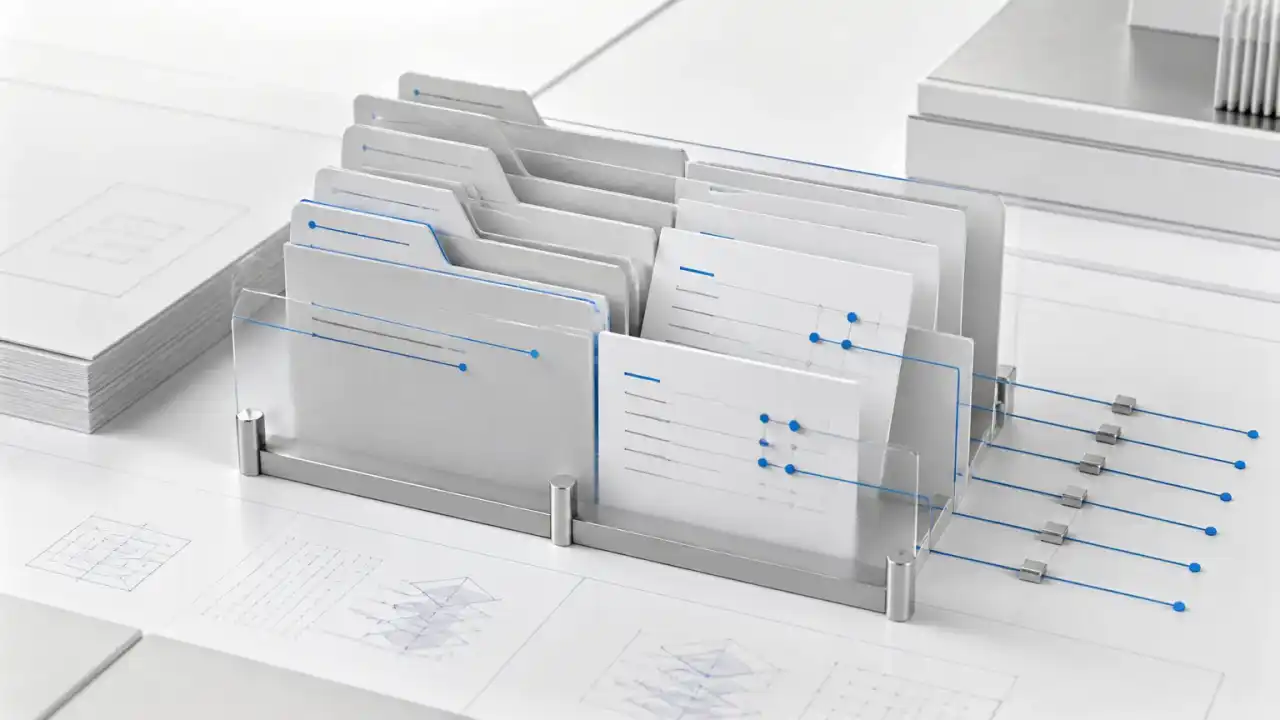
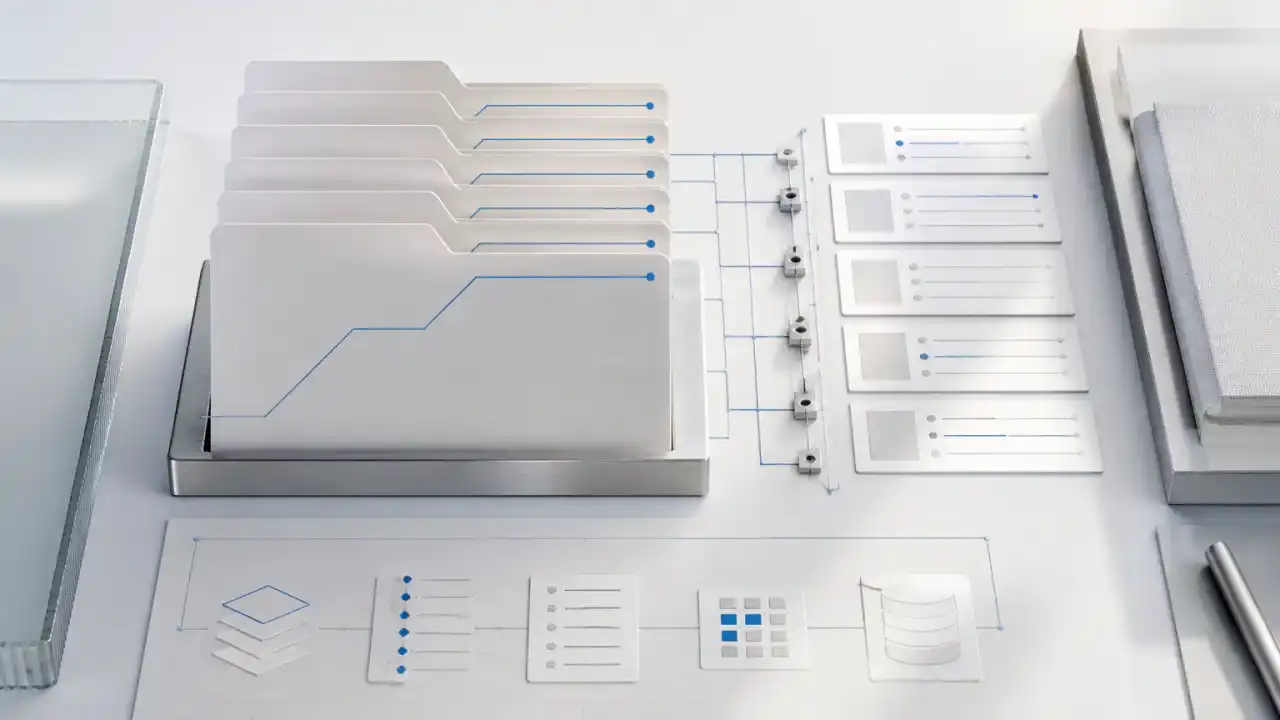
RAG (Retrieval-Augmented Generation) does not change the model. Instead, it builds a pipeline that searches your private documents for relevant snippets and feeds them into the model alongside the user's question. The model then synthesizes an answer based only on that retrieved context. Microsoft's Azure AI Search documentation highlights that RAG is the industry standard for grounding AI in real-time, external data that was not part of the model's original training set.
The Enterprise Search Implementation: Why RAG Wins
For enterprise knowledge bases, technical support assistants, and document analysis, RAG is often the first architecture to evaluate when answers must reflect changing source material and show citations. It is not universally superior; the decision depends on the required behavior, data, and evaluation results. Here is why:
- Data Volatility: In a corporate environment, documents change daily. If you fine-tune a model on your HR policy and then the policy changes, you must re-train the model. With RAG, you simply update the document in your vector database, and the AI has access to the new information instantly.
- Verification and Citations: Enterprise users need to know why an AI says what it says. RAG allows the system to provide direct links to the source document. Fine-tuned models cannot provide citations because the knowledge is baked into their weights; they "just know it," which is a recipe for distrust in a regulated environment.
- Permission-Awareness: This is the most critical hurdle for enterprise search. If you fine-tune a model on your entire company's data, the model might accidentally reveal the CEO's salary or sensitive M&A plans to a junior employee. RAG allows for a "Cited Knowledge Loop" where security filters are applied at the retrieval stage, ensuring the AI only sees what the user is authorized to see.
The Cited Knowledge Loop: A Concrete Workflow
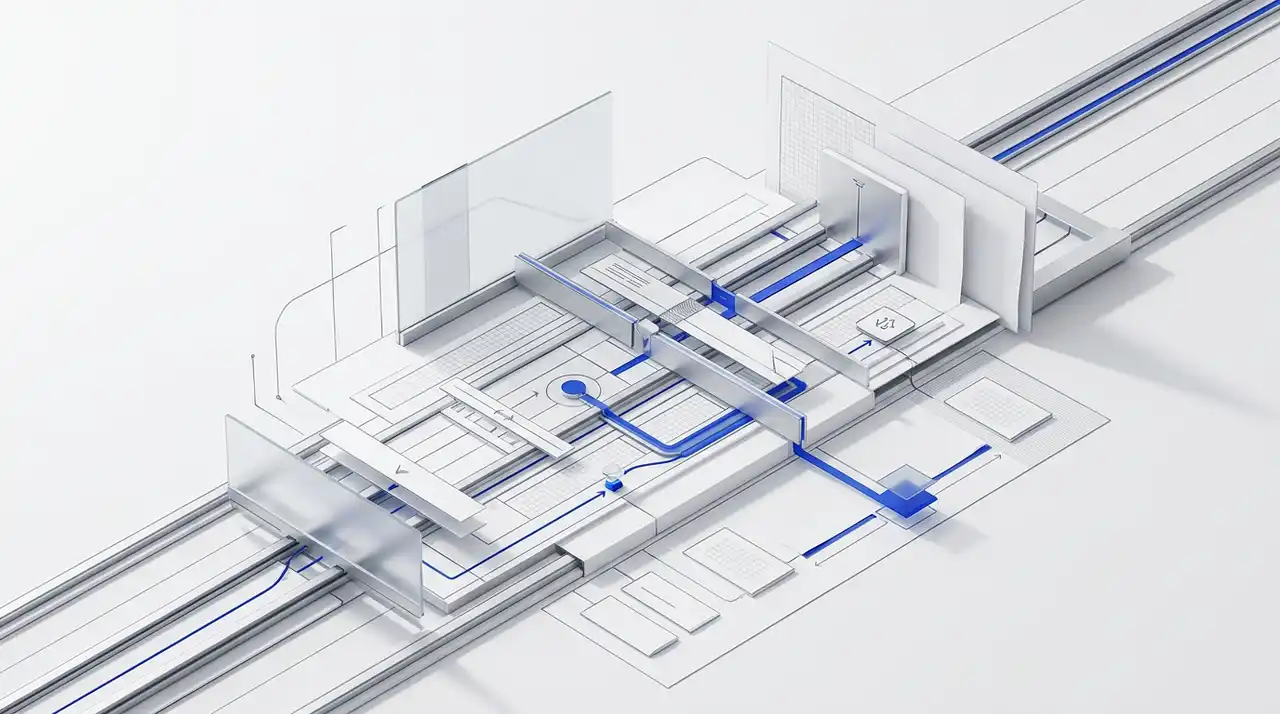
To visualize how a professional RAG system functions, let's look at a Technical Support Triage Workflow we might build for a software-as-a-service (SaaS) provider.
The Input
An enterprise customer submits a high-priority ticket: "Error Code 504 on the v2 API during batch processing."
The System Action (The Build Path)
- Vector Search: The system converts the query into a numerical vector and searches an internal database containing past incident reports, engineering Jira tickets, and API documentation.
- Permission Filtering: The system checks the identity of the agent handling the ticket. It filters out any internal post-mortems marked 'Confidential' that the agent does not have permission to view.
- Contextual Synthesis: The system passes the top three most relevant (and permitted) document snippets to the LLM. It instructs the model: "Based only on these notes, draft a resolution for the agent."
- Grounding: The system uses Google Cloud's Grounding techniques to ensure the model does not invent steps not found in the source text.
The Human Approval Point
The agent receives a draft response with three internal source links. The agent verifies the solution and clicks 'Send.' If the AI fails to find a high-confidence match, the system triggers a fallback to a senior engineer.
The Outcome
Resolution time drops from hours to minutes. The agent doesn't have to search five different repositories, and the company maintains a strict audit trail of which documents informed the response.
Decision Framework: When to Build What
Before committing capital to an AI project, founders and product heads should use this simple decision matrix:
- Choose RAG if: Your data changes more than once a month; you need to cite sources; your data is stored behind different permission levels (SharePoint, Google Drive, Slack); or you need to get to market in weeks rather than months.
- Choose Fine-Tuning if: You need the model to follow a highly complex output format (like a proprietary JSON schema); you are working in a niche field with terminology the model doesn't understand (e.g., specialized medical or legal sub-fields); or you need to reduce latency by using a smaller, more efficient model that has been specialized for one narrow task.
- Choose Both if: You are building a high-scale, specialized agent. You use RAG to provide the facts and a fine-tuned small model to process those facts with extreme efficiency and a specific brand voice.
Risks and Trade-offs: When to Wait
Building a RAG system is not a silver bullet. There are specific scenarios where we advise clients to wait or reconsider their approach:
- Messy Data Pipelines: If your company's knowledge is scattered across thousands of duplicate, outdated, and contradictory PDFs, RAG will merely surface the mess faster. The bottleneck isn't the AI; it's the data hygiene. You should not build a RAG system until you have a clear plan for data deduplication.
- Low Query Volume: If your team only asks ten questions a day, the manual effort of searching is likely lower than the cost of building and maintaining a vector database and embedding pipeline. The ROI of enterprise search typically kicks in when you have a high volume of repetitive queries or a large, rotating staff that cannot be trained on every document.
- High-Stakes Reasoning: If the workflow requires the AI to make a definitive judgment with zero human oversight in a regulated field (like approving a mortgage), current RAG systems are often too risky. We recommend keeping a "Human-in-the-loop" as a mandatory governance standard in these cases.
Implementation Strategy: The Operating Model
At Quellix Labs, we don't just deliver a model; we deliver an Operating Standard. For an enterprise search build, this includes:
- The Embedding Pipeline: How we turn your documents into the 'vectors' the AI understands.
- The Reranking Layer: A secondary AI pass that looks at the search results and picks the best ones, significantly increasing accuracy over basic search.
- The Observability Suite: A dashboard that tells you which documents are being used most often and which user queries are returning 'no results,' highlighting gaps in your company's documentation.
For leaders, the goal isn't just to have a chat box on your desktop. It is to reduce the 'tax' that every employee pays when they have to stop work to go hunt for information. By choosing the right architecture-usually a robust, permission-aware RAG system-you turn your company's fragmented data into a competitive asset.