Evaluating Claude Fable 5 for Enterprise AI Agents
For the last two years, enterprise AI has been stuck in a "proof of concept" loop. Most teams built wrappers around chat interfaces that could summarize text or answer basic support questions. However, these systems often failed when faced with dynamic visual data or complex, multi-step execution. The release of Anthropic's Claude Fable 5 on June 9, 2026, marks a shift from these simple assistants to what we call "Mythos-class" agents. These are models capable of visual logic and autonomous execution that actually hold up in a production environment.
At Quellix Labs, we evaluate new models not by their benchmarks, but by their ability to close the loop between reasoning and action. Fable 5 introduces three specific capabilities-visual gameplay logic, autonomous coding, and safety reauth filters-that change the math on whether an AI system is worth building. If you are a founder or technology buyer, the question is no longer "Can AI do this?" but "Is the visual and operational complexity of this task high enough to justify a Fable 5 build?"
Claude Fable 5 AI agents, explained
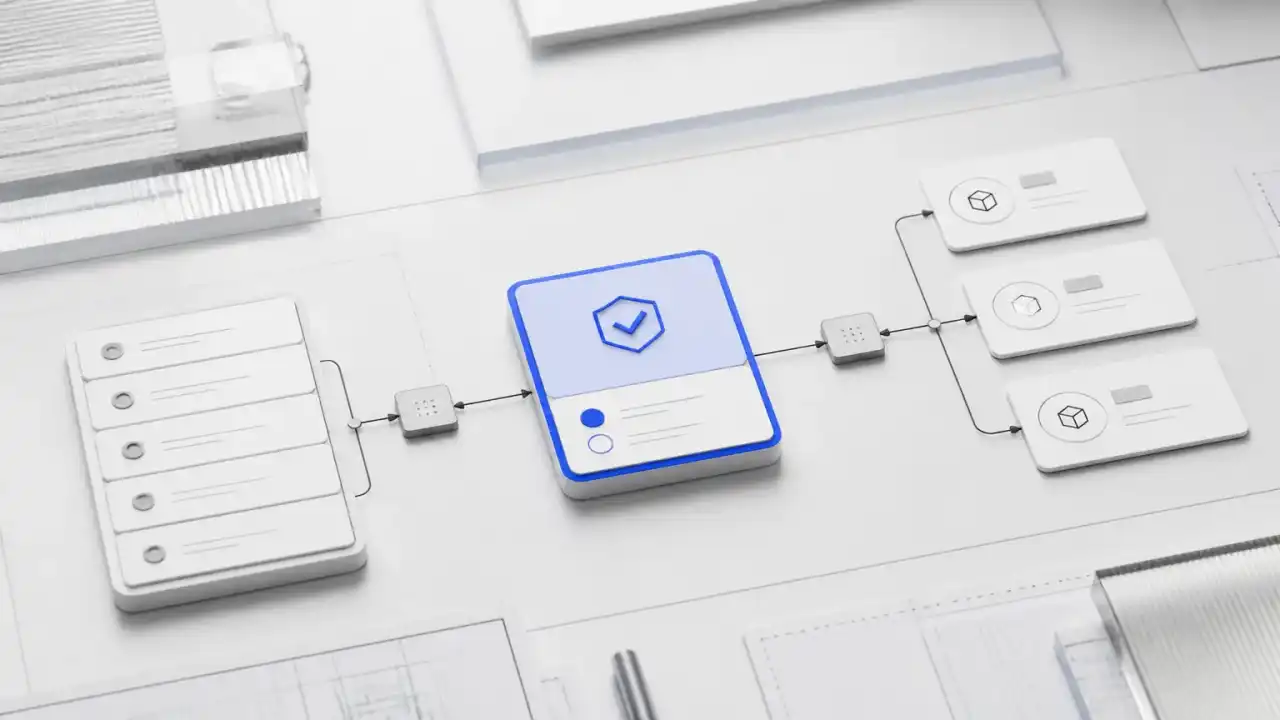
Claude Fable 5-style enterprise AI agents should be evaluated by workflow authority, not novelty. The useful review asks what tools the agent can use, which decisions need approval, how errors are caught, and whether the system can explain its actions.
For enterprise buyers, autonomy is only valuable when paired with governance. Visual reasoning, tool use, and long-running tasks need boundaries before they are connected to customer data, finance operations, or production systems.
The Shift to Visual Logic
One of the most discussed features of Claude Fable 5 is its ability to play visually complex games like Pokémon or Slay the Spire. While this sounds like a consumer gimmick, the underlying technical capability is profound for B2B applications. These games require the model to interpret a constantly changing visual state, manage long-term resources, and predict the outcomes of hidden variables.
In a business context, this translates to navigating complex, legacy enterprise software that lacks an API. Most "agents" break the moment a UI element shifts or a pop-up appears. Fable 5's visual reasoning allows it to "see" a dashboard, understand the hierarchical relationship between data points, and interact with the interface just as a human operator would. This unlocks automation for high-value workflows in logistics, medical imaging, and visual quality assurance that were previously impossible to script.
Autonomous Coding in the operating loop
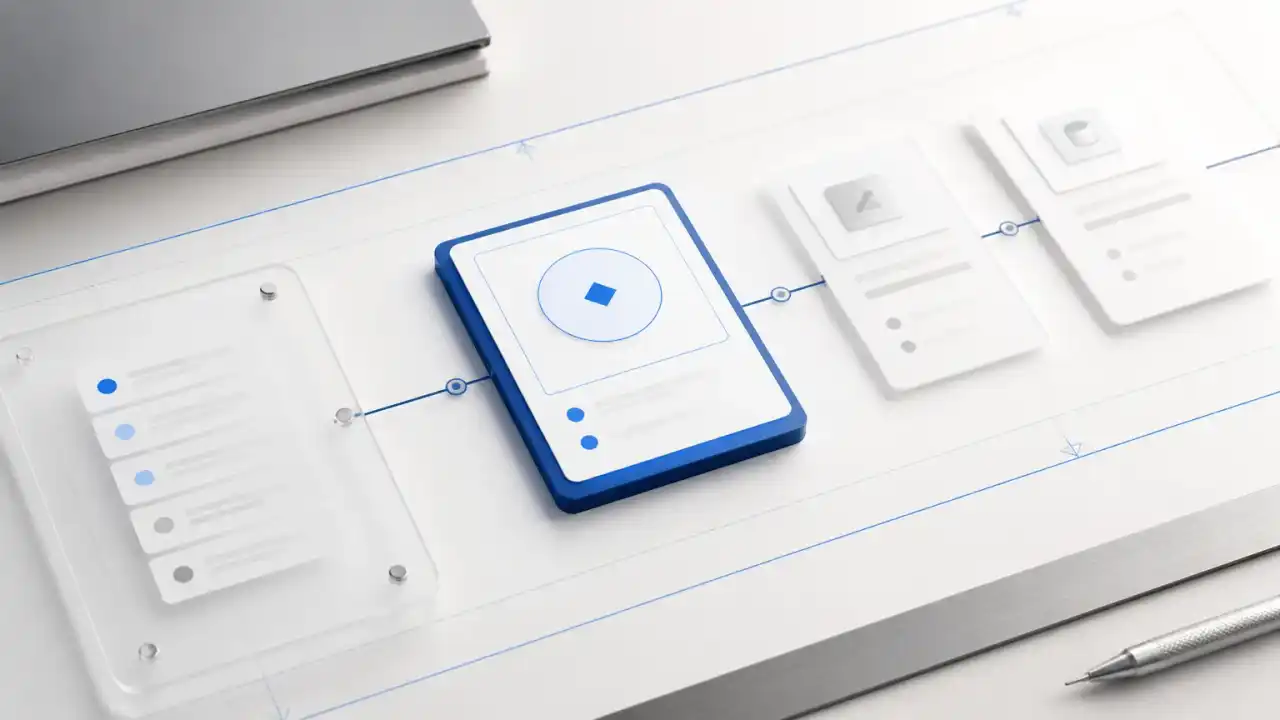
Fable 5 represents a major leap in autonomous coding. Previous models could suggest snippets of code, but they struggled to understand the entire repository context or verify if the code actually worked. Fable 5 is designed to operate within our "operating loop" framework: review-gated execution.
When a Fable 5 agent encounters a task-such as updating a CRM field based on a complex email chain-it doesn't just write a script. It reasons about the required data structure, acts by writing the integration code, and then verifies the execution by checking the system logs. If the verification fails, the model iterates on its own code until the task is successful. This reduces the "human-in-the-loop" requirement from constant supervision to final approval, significantly lowering the operational cost of maintaining custom AI integrations.
The Safety Reauth Filter: A Governance Standard
For enterprise buyers, the biggest risk of autonomous agents is the "runaway execution" problem. No leader wants an AI agent making unauthorized financial transfers or deleting database records because it misinterpreted a prompt. Anthropic has addressed this with "Safety Reauth Filters."
This is not a simple blocklist. It is a programmatic handshake. When the model identifies that an intended action exceeds its pre-defined authority-such as a high-value transaction or a structural change to a codebase-it triggers a mandatory re-authentication. The agent pauses, preserves its state, and requests a human or a secure system token to proceed. This allows Quellix to build systems that are autonomous by default but governed by design, meeting the standards set by the NIST AI Risk Management Framework.
Workflow Implementation: The Visual UI Auditor
To understand how this looks in practice, let's look at a workflow Quellix Labs builds for product-led growth companies: The Visual UI Auditor.
The Problem: Large SaaS platforms often suffer from "visual regressions." A developer updates a button in the billing section, and it accidentally breaks the layout of the mobile checkout page. Traditional automated testing (like Selenium) is brittle and misses visual nuances like overlapping text or off-brand colors.
The Build Path:
- Input: The agent is given access to a staging environment and the company's Figma design system.
- Reason: Fable 5 crawls the staging site, comparing every page's visual state against the design guidelines. It uses its visual reasoning to identify where the UI "feels" wrong or is technically broken.
- Act: Instead of just reporting the bug, the agent uses its autonomous coding capability to write a CSS or React fix. It opens a Pull Request in GitHub with the fix attached.
- Verify: The agent re-scans the staging environment after the fix is applied to ensure the visual regression is resolved without creating new issues.
- Human Approval: A senior developer reviews the Pull Request. They don't have to find the bug or write the fix; they only have to audit the solution.
Evaluation target: This workflow should shorten the QA loop and surface visual-brand deviations for review. The actual change in cycle time and coverage must be established with a representative evaluation set before rollout.
Decision Framework: When to Build with Fable 5
Building with a Mythos-class model like Fable 5 is an investment. It is more expensive and has higher latency than smaller, specialized models. You should consider a Fable 5 build if your workflow meets at least two of the following criteria:
- High Visual Complexity: Your data isn't just text. It involves interpreting charts, maps, UI layouts, or physical imagery.
- Dynamic Environments: The system the AI interacts with changes frequently, making static scripts or traditional RPA (Robotic Process Automation) useless.
- Multi-Step Execution: The task requires more than five sequential steps where the outcome of step one dictates the logic of step three.
- High Governance Requirements: You need the Safety Reauth Filter to manage liability for high-stakes actions.
If your goal is simply to categorize support tickets or summarize meetings, Fable 5 is overkill. You are better off using a smaller model like Claude 3.5 Haiku or a fine-tuned open-source model. We often advise clients to start with a "Signal-to-Action" model for simpler tasks before graduating to the full operating loop of Fable 5. For more on this, see our guide on Predictive Lead Scoring and Next Best Action.
Risks, Limits, and Trade-offs
Even with the advancements in Fable 5, there are clear reasons to wait or limit the scope of your build.
First is the Latency Penalty. Mythos-class models prioritize reasoning depth over speed. If you need a real-time response for a customer-facing chatbot, the 5-10 second