Open Agent Standards Put Portability on the Build Plan
An AI agent can look portable in a demo and still be tightly bound to one provider in production. The lock-in often lives outside the model: in prompt formats, tool definitions, procedural instructions, execution environments, and the workflow code that connects them.
That is why the Agentic AI Foundation's new contributions deserve a buyer's attention. Anthropic is contributing Agent Skills, OpenAI is contributing the Open Responses specification, and Hugging Face and Alibaba are contributing OpenEnv and OpenSandbox. These projects sit alongside the foundation's existing work on the Model Context Protocol (MCP), under Linux Foundation governance. The announcement establishes an effort toward shared building blocks-not a guarantee that any agent can move between providers unchanged. (Agentic AI Foundation announcement)
For a business, the useful question is not whether a standard is open. It is whether the workflows you depend on can change models without an expensive rewrite, a loss of control, or a drop in service quality.
When this needs an AI agent build
Move from research to an implementation conversation when an agent must repeatedly interpret a request, use business tools, and finish a defined task-with an approval or fallback when it is uncertain. Examples include support triage that updates a CRM, lead research that prepares a rep's next action, or an internal assistant that finds policy guidance and drafts a response.
Portability matters most when the workflow is valuable enough to run across more than one model, provider dependency is a material business risk, or model changes are likely during the system's life. It is less urgent for a low-risk prototype with no durable workflow logic and little cost to replace.
If your agent needs controlled tool use, human approvals, and a path to change models without rebuilding the whole workflow, Quellix Labs' AI agent development services are the relevant implementation context. Start by mapping one workflow and its provider-specific dependencies, rather than attempting a broad platform migration.
What the new projects change-and what they do not
The foundation describes four projects with different roles. Agent Skills packages reusable instructions for tasks. Open Responses describes an API specification for communicating with AI models. OpenEnv focuses on environments for agent interaction and evaluation, while OpenSandbox provides a sandboxed environment for running agent-generated code and tool workloads. MCP remains a separate, existing foundation project for connecting AI applications to external systems and data. (Agentic AI Foundation announcement, The Linux Foundation announcement)
These layers address different sources of coupling. A shared instruction format may help teams reuse a procedure. A common model API may simplify how applications pass requests and receive responses. A defined environment or sandbox may make some execution and testing practices easier to carry between deployments. A tool-connection protocol can make integrations less dependent on one model's interface.
None of those pieces automatically standardizes your company's permissions, data quality, approval policies, or business rules. Nor does an open specification mean each provider supports every feature in the same way. Buyers should treat the projects as potential portability surfaces to evaluate, not as a ready-made cross-platform agent.
Anthropic says Agent Skills are integrated across more than 70 platforms and reports nearly 280 million installs. Those figures indicate substantial reported distribution, but they do not establish that every skill behaves identically on every platform or fits a particular enterprise workflow. (Anthropic's Agent Skills announcement)
Workflow design: separate the procedure from the provider
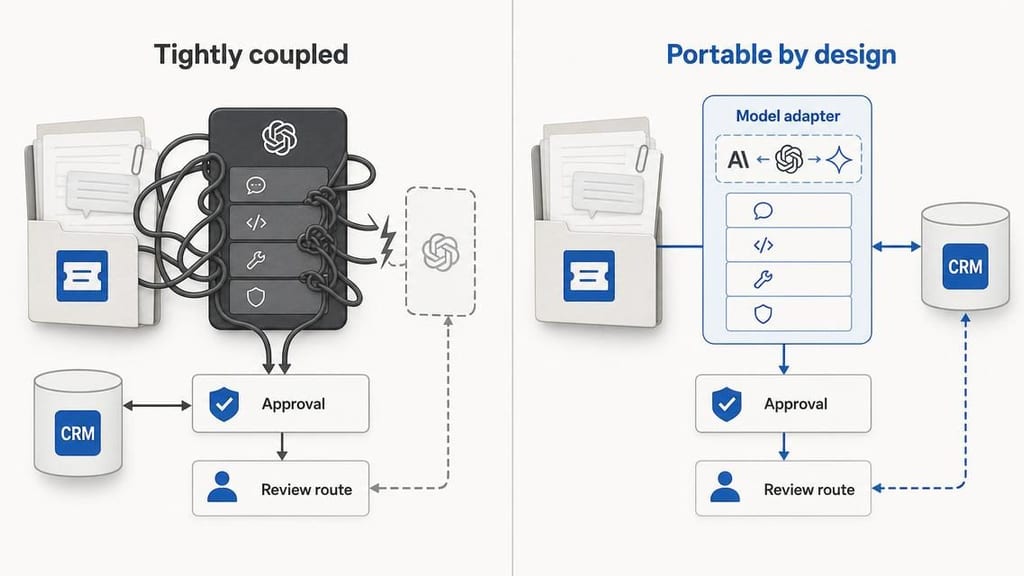
Consider a support workflow. A ticket arrives with a customer message, account details, and prior case history. The agent classifies the request, retrieves relevant guidance, drafts a reply, and recommends a CRM update. A human approves sensitive responses or account changes. If required data is missing, a tool fails, or the agent is unsure, the case goes to a review queue instead of receiving an invented answer.
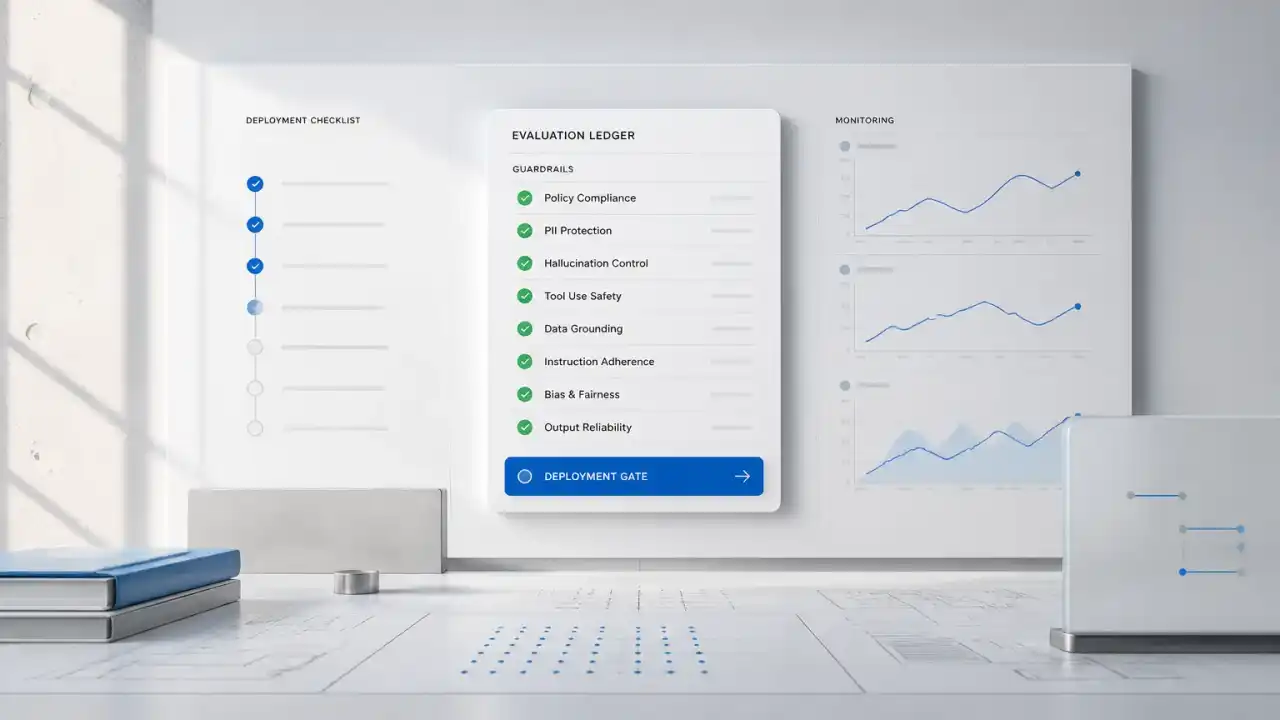
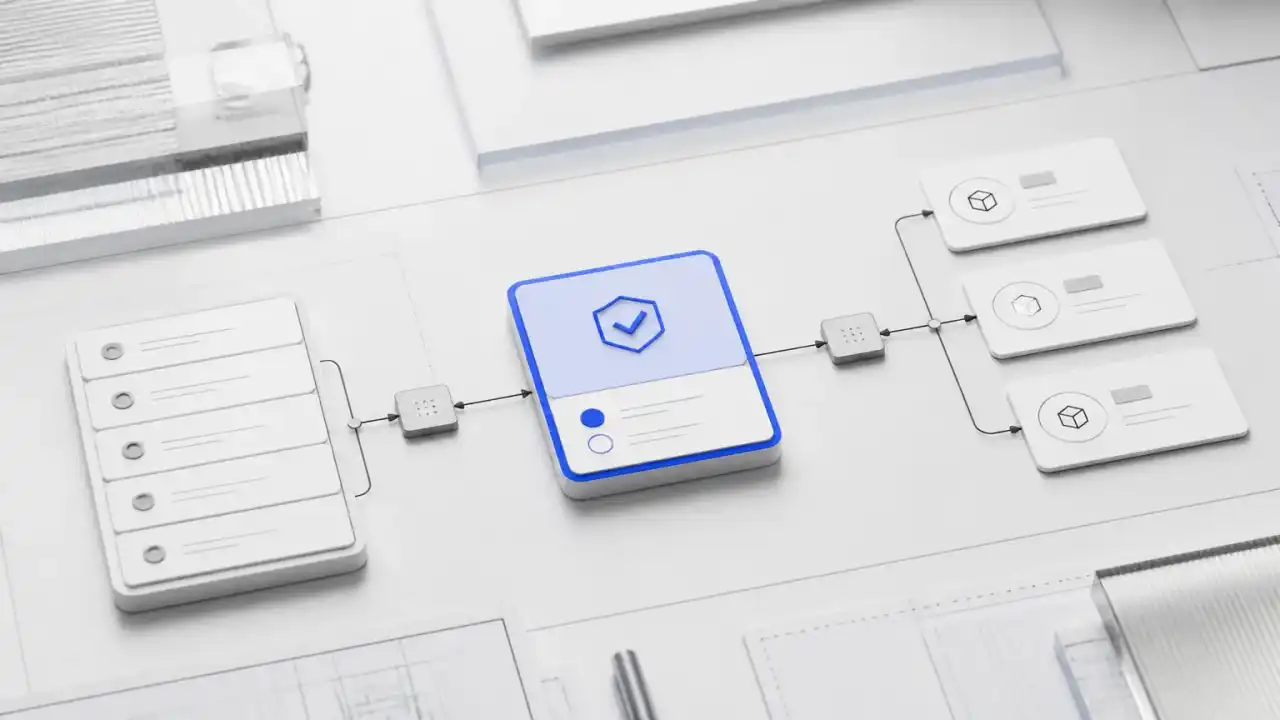
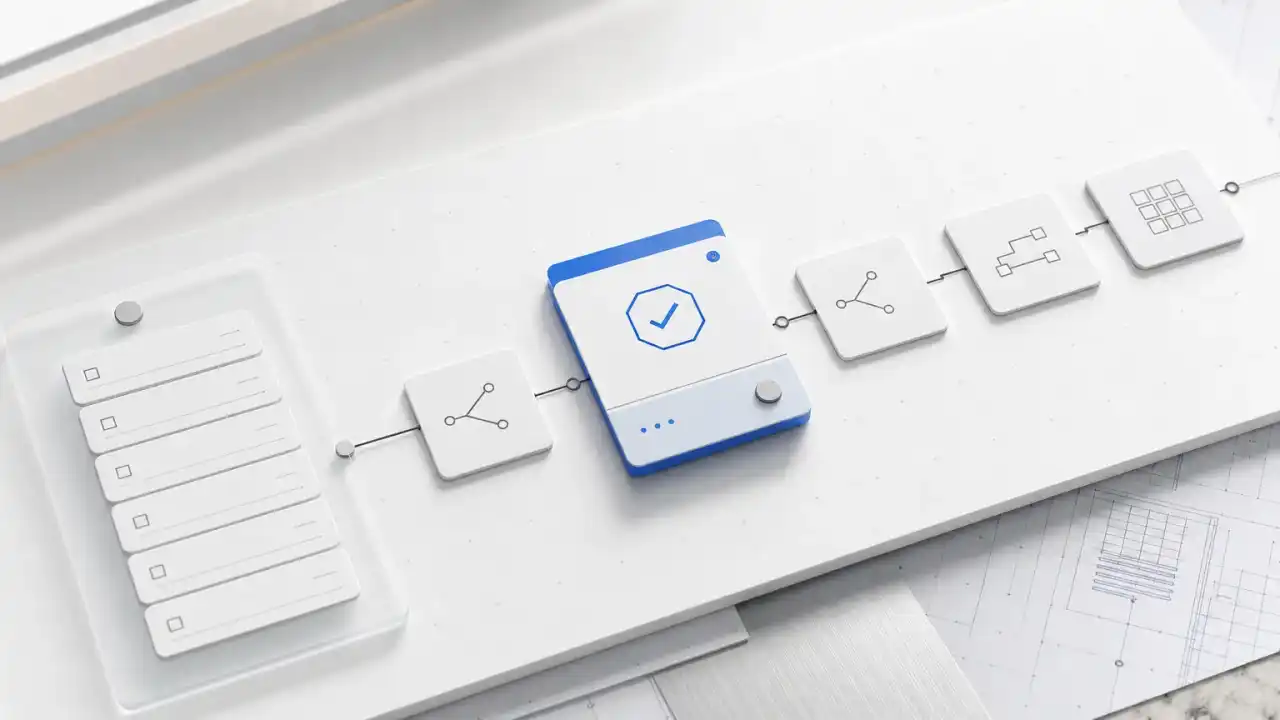
A portable build keeps that business sequence distinct from provider-specific behavior. The workflow definition should say what information is required, what actions are allowed, when approval is mandatory, and what happens on a failure. Provider adapters handle differences in model requests and responses. Tool connectors manage CRM and support-system access. Logs record the decision, evidence, model, tool calls, and approval outcome.
This separation is more valuable than aiming for identical output from every model. Different models may interpret instructions differently or support different capabilities. The business requirement should be consistent-such as never sending a refund commitment without approval-even when the model used to draft the response changes.
Open Responses is relevant to the model communication layer: its specification describes a structured way for applications to interact with models. Teams should inspect which features they use and test how each intended provider implements them before treating an API abstraction as interchangeable. (Open Responses specification)
Agent Skills can be useful for packaging task instructions, but instructions are not a substitute for application controls. A skill might explain how to summarize a support case; the application still needs to decide whether the agent may access that customer's data or submit a change. (Anthropic's Agent Skills announcement)
For execution, OpenEnv and OpenSandbox point to another boundary worth designing deliberately: where actions run and how they are contained. The projects describe agent environments and sandboxing, respectively; buyers should assess whether their actual tools, data, and code execution needs are covered before relying on either in a production design. (OpenEnv documentation, OpenSandbox project)
A practical build path for portable agents
1. Choose one workflow and name its outcome. Start with a measurable operational result: fewer manual ticket handoffs, cleaner CRM records, or faster preparation for a sales conversation. Avoid starting with "make our agents portable." Portability is an architectural quality, not the business outcome.
2. Inventory what is tied to the current provider. List prompts, tool schemas, model-specific features, response parsing, evaluation cases, and execution dependencies. Separate what expresses business policy from what exists only because of a particular API. This inventory often reveals that tool permissions and exception handling are greater lock-in risks than the prompt itself.
3. Define a provider-neutral workflow contract. Specify required inputs, allowed actions, approval thresholds, expected outputs, and fallback paths in terms the business can review. Keep model-specific settings in a replaceable adapter where practical. Do not abstract every model capability; preserve an explicit route for features the workflow genuinely needs.
4. Test behavior across realistic cases. Use a fixed set of ordinary requests, ambiguous requests, missing-data cases, tool failures, and prohibited actions. Compare whether each configuration follows the same business rules, not just whether the text sounds similar. Include human review time and recovery effort in the comparison.
5. Roll out with a safe fallback. Begin with drafts or recommendations before granting consequential write access. Track task completion, escalations, corrections, tool errors, and operating cost. Expand permissions only when the workflow performs reliably under the cases that matter to the business.
This also clarifies where a shared standard has value. If changing the model still requires rewriting the workflow's core sequence, the architecture has not achieved useful portability. If the model adapter changes while approval rules, business tools, and review paths remain stable, the team has reduced the cost of switching-even if some model-specific tuning remains necessary.
What Portability Changes
Risks, limits, and when to wait
Open standards do not remove implementation work. Teams must still map different provider capabilities, test output behavior, secure tool access, and maintain integrations. An organization can also create a new form of lock-in by building its own abstraction layer that nobody understands or tests.
Do not automate a workflow simply because it can be expressed as an agent skill. Wait if the process changes weekly, the source data is unreliable, no owner can define acceptable outcomes, or exceptions are more common than the routine path. Stabilize the process and its permissions first. A standard operating procedure or conventional integration may be cheaper and easier to audit.
Be particularly careful when an agent can send messages, change customer records, approve transactions, or run code. Put authorization in the application and business systems, not solely in model instructions. Keep a human approval point for decisions whose errors carry material customer, financial, or operational impact.
A useful buyer decision rule is this: invest in portability when you can identify a real switching cost and a workflow valuable enough to justify an adapter, testing, and ongoing maintenance. If there is only one low-risk use case and no credible reason to change providers, prioritize workflow reliability over a broad portability layer.
What Quellix would build
Quellix would begin with a workflow map: inputs, systems touched, decision points, human approvals, and failure routes. For a support or sales agent, that might mean reading a case or lead record, gathering approved context, drafting a recommendation, updating a CRM only after authorization, and routing uncertain cases to a person.
From there, we would separate the durable workflow rules from model-specific settings, define the tool and permission boundaries, and test the chosen model configurations against representative cases. The result is not a promise of one-click movement between every platform. It is a system where changing a model does not silently change who can access data, what actions are allowed, or when a person must intervene.
That is the practical scope of AI agent development at Quellix Labs: build the workflow and its controls first, then make portability serve a real operating need. A useful first step is a technical review of one workflow, its current provider dependencies, and the cost of a model change.
Related Reading
- Gemini Agent: The Controls Your Integrations Still Need looks at the application controls that remain necessary when agents use integrations.
- Claude Haiku 5.5: Route Work Before Switching Models explores model routing as a workflow decision rather than a simple provider swap.
- AI Support Agents: Triage, Actions, and Escalation covers a concrete support workflow with action boundaries and escalation.