The problem: knowledge people can't find or can't trust
Company knowledge sits across drives, wikis, tickets, PDFs and databases. People ask the same questions again and again, and the answer they get depends on who they ask and which version of the document that person last saw.
Done badly, it produces a fluent answer from the wrong document, an outdated one, or one the reader was never allowed to see.
Retrieval-augmented generation (RAG) puts a retrieval step in front of the model: find the approved passages first, then draft an answer from them and cite them. Done well, it gives one trusted way to find an answer and check the source. Done badly, it produces a fluent answer from the wrong document, an outdated one, or one the reader was never allowed to see. That is worse than plain search, because it looks authoritative.
Three problems decide whether people trust the system: permissions (does every answer respect what this person may read?), freshness (does the current policy beat last year's copy?) and faithfulness (does each citation actually support the sentence it sits next to?). The model choice matters less than any of these. The boundary also matters: search should answer and cite, while sending messages, changing records or approving requests belongs in a separately scoped agent workflow.
How to decide, including when not to build
Use a built-in search product when it already fits your sources and permissions. A custom system is useful when the evidence, integrations or investigation steps need a workflow the existing product cannot provide. RAG remains a useful foundation; newer retrieval and context methods are choices to test alongside it, not replacements to adopt on faith.
Build when
- Teams repeatedly search across policies, SOPs, tickets or technical documentation, and the answers need visible sources.
- Access rules differ by role, team or customer, and those rules must hold inside the AI answer and its citations.
- Answers need several sources or a read-only check against a live system such as a CRM or ticket queue.
- Your existing search or assistant product cannot connect the sources, keep the permissions or show the evidence trail you need.
Don't build when
- A built-in search or copilot already covers your sources and permission model.
- The sources are outdated or contradict each other and nobody owns them. Fix ownership and cleanup first; a stronger model will not fix unsupported answers.
- The source set is small and stable. Compare reading it directly in a long context window before building a retrieval pipeline.
- The real need is a consistent output style rather than current facts. Compare fine-tuning first; see RAG vs fine-tuning.
- Users need the system to act, not answer. Scope an agent instead; see the AI Agents & Orchestration guide.
Options, simplest first
Hybrid retrieval and reranking
Combine keyword and semantic search when the corpus is large or changing, and test retrieval quality before asking a model to write an answer.
Agentic retrieval
Let a bounded planner gather several pieces of evidence when one lookup is not enough. More steps need explicit budgets and stronger evaluation.
Long context and caching
Compare direct reading of a small, stable source set against retrieval. Context size alone does not prove accuracy.
GraphRAG where relationships matter
Evaluate graph-assisted retrieval for entity relationships and corpus-wide questions, and account for indexing, freshness and permission costs before adding a graph.
Reference architecture for permission-aware RAG
A production knowledge system is a pipeline, and each stage can be tested on its own. The order below follows a document from its source to a cited answer.
- 01Source inventory and owners
- 02Ingestion with metadata
- 03Permission sync
- 04Filtered hybrid retrieval
- 05Grounded answer with citations
- 06Bounded investigation and live lookups
- 07Evaluation and traces
Source inventory and owners
List the questions people ask, the sources that should answer them, who owns each source, and the access rules that must stay intact.
Ingestion with metadata
Documents are cleaned, split and indexed with their source, date, owner and access list attached, so every retrieved passage can be traced and filtered.
Permission sync
Access rules from the source systems and identity provider are carried into the index and kept current, including changes and deletions. See syncing RBAC with vector search.
Filtered hybrid retrieval
Permission filters apply before retrieval returns anything, not after an answer is drafted. Keyword and semantic matches are combined, then reranked.
Grounded answer with citations
The model drafts only from retrieved passages, links each claim to its source, and shows source dates. When the approved sources do not contain the answer, it says so.
Bounded investigation and live lookups
For questions that need several sources or current business context, a planner runs a limited number of retrieval steps or a read-only lookup, within agreed latency and cost budgets.
Evaluation and traces
Retrieval is measured separately from answer quality on an agreed question set, and every answer keeps a trace of what was retrieved and why.
Quellix calls this the Cited Knowledge Loop: retrieval is scoped to approved sources and access rules, and every answer carries enough source context for a user to verify or challenge it. Permission-aware AI search for enterprise RAG walks through the design.
Common failure modes
Most RAG failures happen before the model writes a word. Testing retrieval, permissions and citations separately is the fastest way to find them.
Filtering after generation
If restricted passages reach the model and are only hidden from the final answer, their content can still leak into the wording. Filter at retrieval time.
Stale permissions
A user loses access to a folder, but the index still treats them as a reader. Permission changes and deletions need their own sync and tests.
The old document wins
Last year's policy ranks above this year's because it is longer or more linked. Source dates, owners and stale-document cues keep old files from becoming the default answer.
Citations that do not support the claim
A citation is attached, but the passage says something different. Check whether each citation supports its sentence, not only whether one exists.
No no-answer path
Without an explicit "the sources do not cover this", the model fills the gap. Test unanswerable and contradictory questions on purpose.
Conflicts resolved silently
Two sources disagree and the answer picks one without saying so. Surface the conflict and route it to the source owner.
Only measuring the final answer
A good-looking answer can hide a retrieval miss that will fail on the next question. Score relevant-source retrieval on its own.
Unbounded investigation
Agentic retrieval that keeps searching drives latency and spend up without improving the answer. Set step, latency and cost limits per answer.
Cost and effort drivers
The effort in a knowledge system sits in connectors, permissions and evaluation. These are the factors that change the scope most.
Number of source systems
Lower effortA few well-kept sourcesHigher effortMany inconsistent sourcesEach drive, wiki, ticketing tool or database needs a connector, cleanup rules and a refresh path. A few well-kept sources are cheaper than many inconsistent ones.
Permission model complexity
Lower effortOne shared knowledge baseHigher effortPer-team or per-customer access that changes oftenOne shared knowledge base is simple. Per-team, per-customer or per-document access, with frequent changes, needs permission sync and access tests.
Corpus size and change rate
Lower effortSmall, stable corpusHigher effortLarge, fast-changing corpusLarge or fast-changing corpora need incremental indexing, deletion handling and freshness monitoring.
Retrieval steps per answer
Lower effortOne lookup per answerHigher effortMulti-step investigation and live lookupsA single lookup is cheap and fast. Multi-step investigation and live lookups add latency and model spend, so budgets are agreed per answer before rollout.
Evaluation question set
Lower effortKnown questions with known sourcesHigher effortOpen questions, including unanswerable onesReal employee questions, the correct sources and the expected answer, including unanswerable cases, come from the people who own the knowledge.
Content ownership
Lower effortOwned, current documentsHigher effortOutdated or conflicting documents with no ownerOutdated or conflicting documents need owners and cleanup rules. That work sits with your team, and it shapes answer quality more than any model choice.
Quellix scopes this work in three steps: a free AI Fit Review of the questions and sources, a focused working POC for qualified opportunities, then production delivery against agreed milestones and acceptance criteria. See how we work and pricing.
Service and case studies
ServiceEnterprise AI Search & Knowledge AgentsHow Quellix scopes, builds and hands over this kind of system.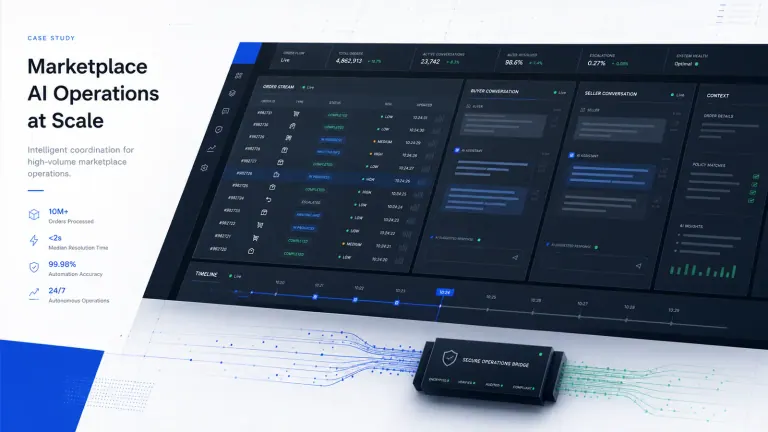 Case studyPermission-scoped retrieval for marketplace sellersThe seller agent retrieves internal knowledge with row-level scoping, so it cannot see another seller's context.
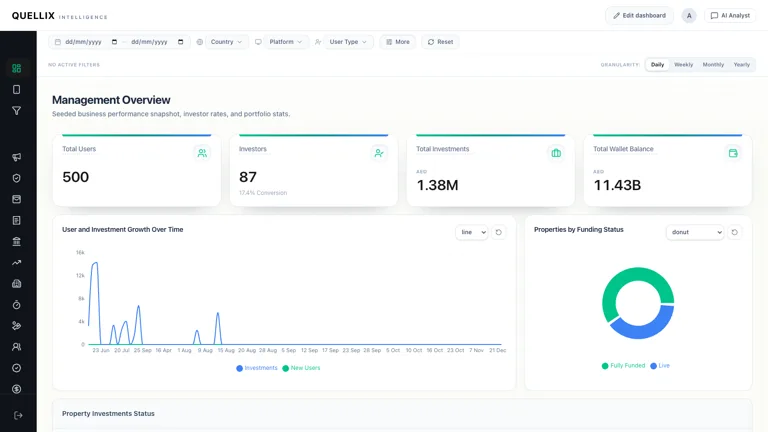 Case studyInspectable answers for real estate analyticsA source-grounded path for new questions that shows the evidence behind every accepted answer. It answers from a database rather than documents, but uses the same evidence-first pattern.
The linked articles explain engineering approaches. They are reading material, not a claim that this exact search architecture has a measured customer deployment.
Start here
The articles below go deeper on the parts of this guide that teams ask about most, in a sensible reading order.
- Permission-Aware AI Search for Enterprise RAGThe full design: retrieval filtered by user access, cited evidence and safe refusals.
- Vector Database Permissions with RBAC SearchHow access changes reach the vector index during retrieval.
- RAG vs Fine-Tuning for Enterprise AI SearchChoosing between RAG and fine-tuning on permissions, freshness and cost.
- RAG Use Cases: Where Enterprise Retrieval PaysWhich retrieval workflows justify a build.
- How AI Finds Answers Across Thousands of DocumentsA plain-English walk through retrieval across large document sets.
- Enterprise AI Assistants for Company DocumentsAssistants that answer from company documents, permissions and tools.
- RAG for Employee Support Without Permission LeaksHR, IT and operations answers that keep risky cases human-led.
Every Enterprise Knowledge & RAG article
All 8 published field notes in this cluster, newest first.
 RAG for Employee Support Without Permission Leaks
A permission-aware support workflow that retrieves approved HR, IT, and operations answers while keeping risky cases human-led.
 RAG Use Cases: Where Enterprise Retrieval Pays
See which RAG workflows justify a build, from permission-aware support and contracts to field service and sales retrieval.
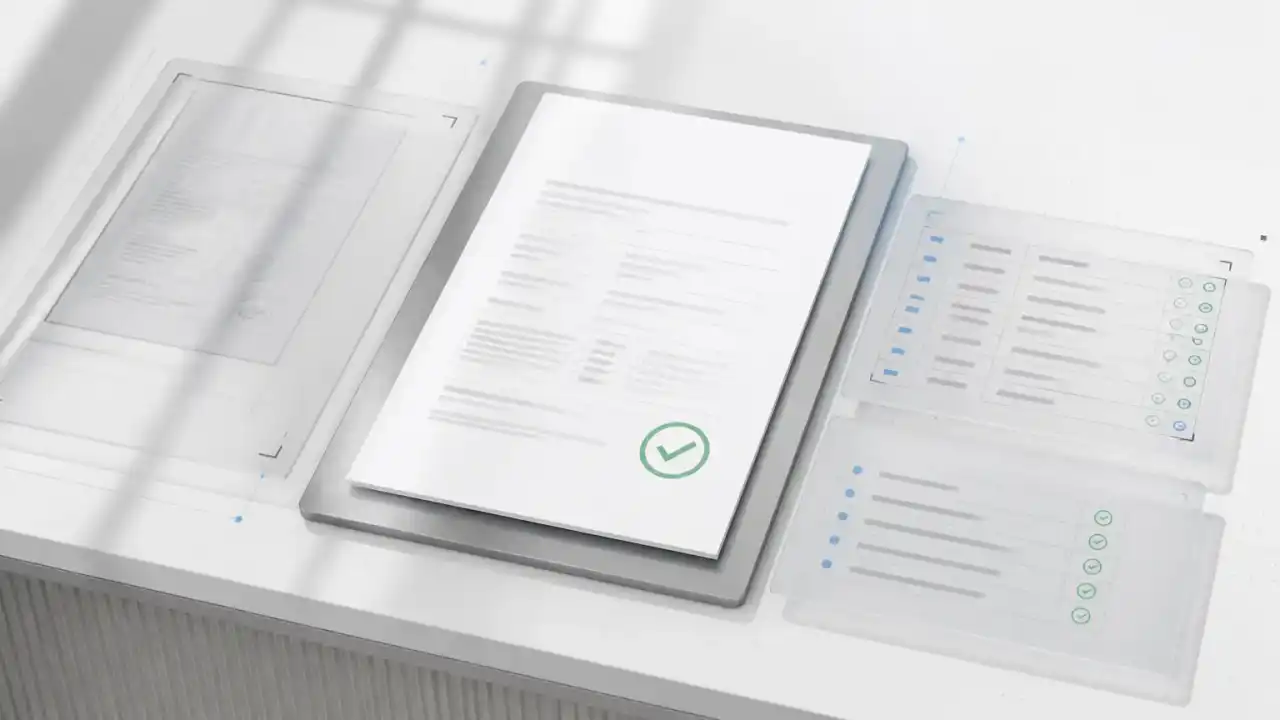 How AI Finds Answers Across Thousands of Documents
A permission-aware retrieval workflow turns scattered documents into cited answers while keeping sensitive content and uncertainty visible.
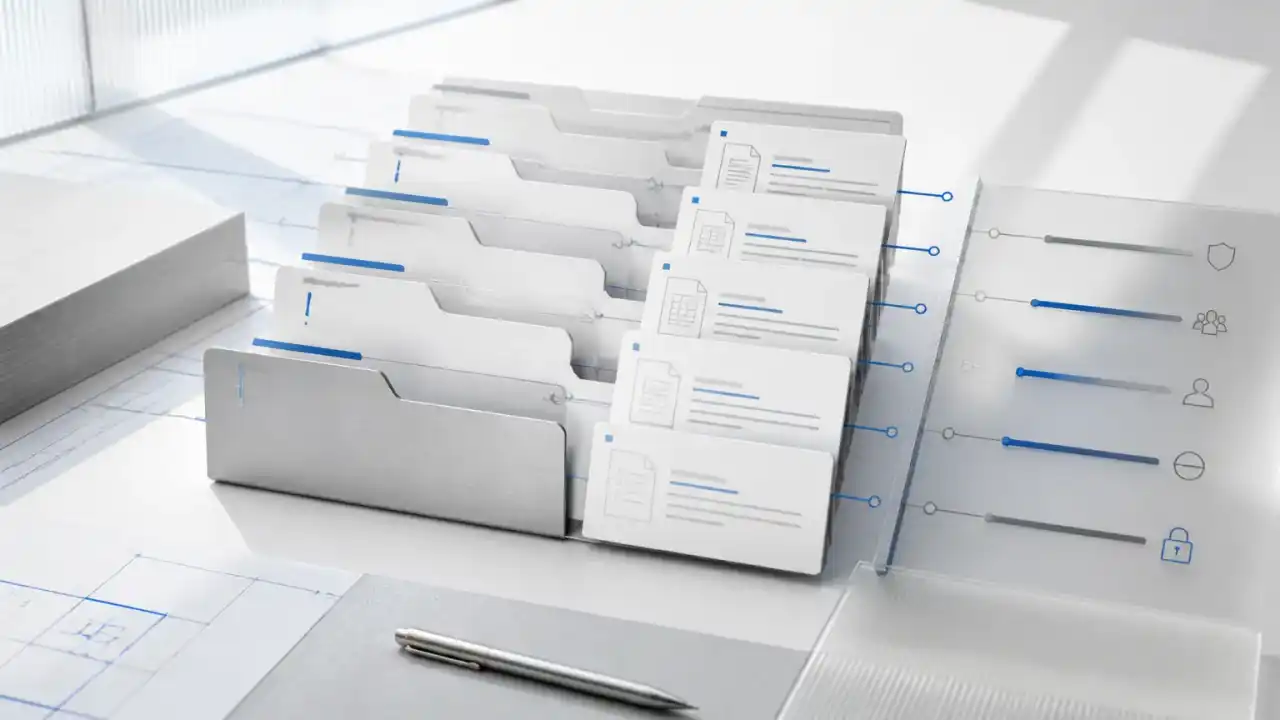 GPT-5.6 in AI assistant Changes Permissioned Knowledge Work
GPT-5.6 becoming Copilot's preferred model raises a practical question: when should internal knowledge work become a governed workflow?
 Vector Database Permissions with RBAC Search
Connect RBAC to vector search so enterprise AI answers use only authorized documents, with permission changes reflected during retrieval.
 Enterprise AI Assistants for Company Documents
Build enterprise AI assistants that answer from company documents, permissions, tools, and approval workflows.
 Permission-Aware AI Search for Enterprise RAG
Permission-aware AI search filters retrieval by user access, cites allowed evidence, and refuses restricted requests safely.
 RAG vs Fine-Tuning for Enterprise AI Search
Choose RAG or fine-tuning by comparing permissions, source freshness, accuracy, cost, and update frequency.
Browse by category: Enterprise Knowledge & RAG
Need answers your team can check?
Bring the questions people ask most, the sources that should answer them and the access rules that must hold. An engineer will map what to index and what to fix first.